
What Is a Hair Patch You noticed it first in a photo. That one angle where your hairline looks thinner than you remember. Maybe someone at a wedding pointed a phone camera at you and the flash did what flashes do best, exposed every gap you’ve been combing over for months.
If you’ve been googling hair patch cost, hair patch vs hair transplant, or is a hair patch permanent at two in the morning, you’re not alone. Thousands of people in Hyderabad and Vizag search these exact questions every single month, usually right after a haircut appointment where the barber said something they didn’t want to hear.
This guide answers everything, in plain language, no jargon, no scare tactics.
Table of Contents
ToggleIntroduction
A hair patch, also called a hair replacement system or non surgical hair replacement, is a custom made hairpiece that attaches directly to your scalp to cover thinning or bald areas. Unlike a wig you take off at night, a good quality patch is bonded to stay on for weeks at a time and looks like your natural hair growing straight out of the scalp.
This matters because hair loss affects confidence in ways that are hard to explain unless you’ve lived through it. Interview nerves hit different when you’re also worried about your hairline. First dates feel harder. Even casual hangouts start involving strategic cap placement.
By the end of this guide you’ll understand exactly what a hair patch is, how it’s different from a transplant, what it actually costs in India right now, how long one lasts, and how to pick a studio that won’t waste your money on a patch that looks like a toupee from a comedy film.
Quick Answer
A hair patch is a non surgical hairpiece made from human or synthetic hair, attached to the scalp using adhesive, tape, or clips to cover bald or thinning areas. It gives an instant, natural looking full head of hair without surgery, usually lasting 3 to 6 months per bonding session, with full replacement needed every 8 to 12 months depending on quality and maintenance.
What Is a Hair Patch?
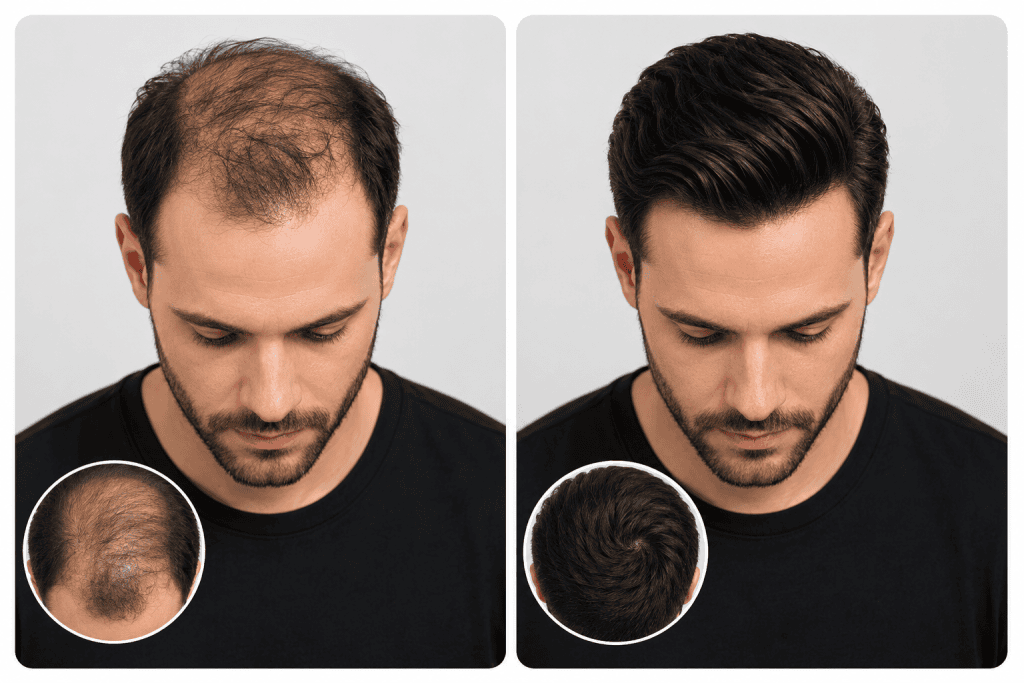
Think of a hair patch as a base, usually made from a thin, breathable material like polyurethane, lace, or a mono mesh, with real human hair or high grade synthetic hair individually knotted into it strand by strand. That base gets shaped to match your scalp and your existing hair color, then bonded onto the bald or thinning area.
Here’s the part most people don’t realize. A well made patch isn’t glued on top like a hat. It’s fitted along your existing hairline and blended with your remaining natural hair so the transition line disappears. Good technicians spend real time on this blending step, because it’s the difference between people asking “did you get a haircut?” and people staring a second too long.
Real world example. A client walks into a hair studio in Vizag with a receding hairline and thin crown. The technician takes scalp measurements, matches hair density and color, and within two to three hours the client walks out with a full head of hair that moves naturally, can be washed, styled, and even gets wet in the rain without falling apart.
That’s the basic idea. Everything else in this guide is detail on top of that.
Why Is It Important?
People assume hair patches are just cosmetic. They’re not, not entirely.
Confidence at work. Client facing roles, sales, teaching, anything where you’re constantly being looked at, benefit massively from not thinking about your hairline every five minutes.
No surgery, no downtime. A hair transplant means weeks of recovery, scabbing, and waiting months to see real results. A patch gives you a full head of hair the same day you walk in.
Reversible and flexible. Don’t like it, or your budget changes, or you’re considering a transplant later. You can simply stop wearing it. There’s no permanent surgical change to undo.
Cost accessible entry point. Compared to multiple transplant sittings, a patch is a fraction of the price, which makes it the starting point for a lot of people who aren’t ready to commit to surgery yet.
None of this means a patch is right for everyone. But for a huge number of people dealing with pattern baldness, alopecia, or patchy hair loss from stress or medical reasons, it’s genuinely life changing.
Complete Guide: How Hair Patches Actually Work
Step 1: Scalp Assessment and Consultation
What It Means
Before anything gets made or attached, a technician examines your scalp, hair loss pattern, existing hair color, texture, and density.
Why It Matters
Skip this step and you end up with a patch that doesn’t match your natural hair, which is the single biggest giveaway that someone’s wearing one.
How To Do It
Visit a studio in person if possible. They’ll take photos, measure the bald area, and check your scalp for oiliness, sensitivity, or existing skin conditions that might affect adhesive choice.
Example
A client with oily scalp gets recommended a lace base with a specific medical grade adhesive designed for oil resistance, instead of a standard tape that would lift within days.
Pro Tip
Ask to see the technician’s previous client photos, ideally in natural daylight, not studio lighting that hides imperfections.
Step 2: Custom Base Selection
What It Means
Choosing the material the hair is knotted into. Common options are French lace, Swiss lace, polyurethane (skin base), and mono base.
Why It Matters
This decision affects how natural it looks, how long it lasts, how much it costs, and how comfortable it feels day to day.
How To Do It
Lace bases look the most natural and breathe well but wear out faster. Skin bases are thicker, more durable, and easier to maintain but can look slightly less natural up close.
Example
Someone who sweats a lot or lives in a hot city like Vizag might be steered toward a skin base for durability, while someone prioritizing the most undetectable look might choose a thin lace front.
Pro Tip
Ask for a combination base, lace at the front hairline for a natural look, skin base at the back for durability. Most premium studios offer this
Step 3: Hair Matching and Density
What It Means
Matching the color, curl pattern, and thickness of the patch hair to your natural remaining hair.
Why It Matters
Mismatched density or color is the second biggest giveaway after a bad base. Too much hair looks fake. Too little looks patchy.
How To Do It
A skilled technician will actually pull a small sample of your existing hair and match it under natural light, not just fluorescent salon lighting.
Example
A client with salt and pepper hair needs a custom blend, not a single uniform color, because real hair never grows in one flat shade.
Pro Tip
If you’re planning to color your hair in future, mention it during matching. Human hair patches can be dyed later, synthetic ones usually can’t.
Step 4: Attachment and Bonding
What It Means
The actual process of fixing the patch to your scalp using adhesive tape, glue, or clips.
Why It Matters
This determines how secure it feels, whether you can swim or exercise with it, and how long it stays on before needing a touch up.
How To Do It
Tape bonding lasts around 2 to 4 weeks. Glue based bonding can last 4 to 6 weeks. Clip based systems are removable daily but less secure for active lifestyles.
Example
Someone who plays cricket or swims regularly usually needs a stronger waterproof adhesive and more frequent studio visits for touch ups.
Pro Tip
Never try to remove a bonded patch yourself with random household products. Proper adhesive removers protect both your patch and your scalp skin.
Step 5: Styling and Cutting
What It Means
Once attached, the patch gets cut and styled to blend with your natural hair, exactly like a normal haircut.
Why It Matters
A patch straight off the shelf never looks right. Styling is what makes it look like it’s actually growing from your head.
How To Do It
This should happen in the same sitting, right after bonding, using your face shape and existing hairstyle as reference.
Example
A client who always parted hair on the left gets the patch cut and styled to maintain that exact same part, keeping the look consistent with old photos.
Pro Tip
Bring a recent photo of yourself from before hair loss started. It gives the stylist a real reference point instead of guessing.
Common Mistakes
Mistake: Choosing the cheapest option available.
Impact: Poor quality bases shed hair fast, look obviously fake, and often cause scalp irritation.
Solution: Treat this as an investment in your appearance and confidence. Mid range quality pays off over time in fewer replacements and better results.
Mistake: Skipping maintenance visits.
Impact: Adhesive weakens, edges lift, and the patch starts looking messy or even falls off in public.
Solution: Stick to the studio’s recommended touch up schedule, usually every 3 to 4 weeks.
Mistake: Not matching hair color properly.
Impact: Even a perfect base looks fake if the color is off by even one shade.
Solution: Always request color matching in natural daylight, not indoor lighting.
Mistake: DIY removal or home adhesive products.
Impact: Can damage the patch, irritate your scalp, or cause allergic reactions.
Solution: Always use studio recommended removers and let a professional handle bonding and removal until you’re experienced.
Best Practices
Wash your patch with sulfate free shampoo specifically made for hair systems, not regular shampoo. Sleep with a silk or satin pillowcase to reduce friction and extend the life of the bond. Avoid direct heat styling on synthetic patches since they can melt. Get your patch professionally cleaned and re bonded on schedule instead of stretching it out to save money, because a poorly maintained patch actually looks worse than no patch at all.
Tools and Resources
| Base Type | Natural Look | Durability | Approx Cost (INR) | Best For |
|---|---|---|---|---|
| French Lace | Excellent | Moderate (3-4 weeks) | 8,000 to 15,000 | People wanting the most undetectable finish |
| Swiss Lace | Very Good | Moderate | 10,000 to 18,000 | Front hairline sections |
| Polyurethane (Skin) | Good | High (4-6 weeks) | 12,000 to 20,000 | Active lifestyles, humid climates |
| Mono Base | Good | High | 10,000 to 16,000 | Balance of comfort and durability |
| Combination Base | Excellent | High | 15,000 to 25,000 | Overall best all rounder |
Prices vary by studio, hair quality (human remy hair costs more), and patch size. Always ask for a full breakdown before committing, including bonding kit and maintenance visit costs.
Real-Life Example / Case Study
Situation
A 29 year old marketing professional in Hyderabad started noticing a receding hairline and thinning crown after a stressful year at work. He’d been avoiding video calls and skipping gym sessions because of how self conscious he felt.
Challenge
He wasn’t ready for a surgical transplant, both financially and mentally, but wanted an immediate, natural looking fix he could rely on for interviews and client meetings.
Action
He visited a local hair studio for a consultation, chose a combination base system matched to his exact hair color and density, and got it bonded and styled in one sitting that took about three hours.
Result
Within a day, colleagues stopped noticing anything different, aside from a few “you look fresh” comments. He now visits the studio every 4 weeks for maintenance and says the biggest change wasn’t how he looks, it’s that he stopped thinking about his hairline every time he walked into a room.
Expert Tips
Ask your studio if they offer a trial or sample bonding before committing to a full custom order. Request to see the base material up close under bright light before it’s attached, not just in photos. If you have sensitive skin, request a patch test with the adhesive 24 hours before your appointment. Consider getting two patches on rotation once you’re a regular client, so one can be cleaned and serviced while you wear the other.
Frequently Asked Questions
Is a hair patch permanent?
No. A hair patch is a semi permanent, non surgical solution. It’s bonded to stay on for weeks at a time but can be removed anytime, unlike a hair transplant which is a permanent surgical change.
How long does a hair patch last?
The bonding itself lasts 3 to 6 weeks depending on the adhesive and base type. The full patch typically needs replacement every 8 to 12 months with proper maintenance.
Does a hair patch look natural?
Yes, when made and fitted correctly by an experienced technician. Natural results depend heavily on color matching, base type, and styling quality.
Can I swim or exercise with a hair patch?
Yes, most modern adhesives are waterproof and sweat resistant. Active individuals should mention their lifestyle during consultation so the studio recommends the right bonding method.
What is the average hair patch cost in India?
Costs typically range from 8,000 to 25,000 rupees depending on base material, hair quality, and patch size, with ongoing maintenance visits costing extra.
Hair patch vs hair transplant, which is better?
A hair patch gives instant results without surgery or downtime, ideal for quick fixes and budget conscious choices. A hair transplant is a permanent surgical solution with a longer recovery period and higher upfront cost.
Can I color or style a hair patch?
Human hair patches can be colored, cut, and styled just like natural hair. Synthetic patches usually cannot be dyed and have limited styling flexibility.
Will people notice I'm wearing a hair patch?
With a properly matched, well maintained patch, it’s very difficult to tell. Most detection issues come from poor color matching, outdated bases, or missed maintenance visits.
Is hair patch bonding painful?
No, the bonding process is painless. Some people experience mild scalp sensitivity initially, especially with certain adhesives, which usually settles after the first few sessions.
Who is a good candidate for a hair patch?
Anyone dealing with pattern baldness, alopecia, thinning crown, receding hairline, or patchy hair loss from stress, medical treatment, or genetics is generally a good candidate, regardless of age.
Key Takeaways
- A hair patch is a custom, non surgical hairpiece bonded to the scalp to cover thinning or bald areas
- Base material (lace, skin, mono, or combination) determines how natural and durable the patch is
- Proper color and density matching is the biggest factor in how natural it looks
- Costs in India typically range from 8,000 to 25,000 rupees depending on quality and size
- Regular maintenance every 3 to 4 weeks keeps the patch looking fresh and secure
- It’s a reversible, flexible alternative to surgery, ideal for people not ready to commit to a transplant
Conclusion
A hair patch isn’t about hiding something. It’s about walking into a room without thinking twice about your hairline. Whether you’re dealing with early thinning or a fuller bald patch, a well made, well maintained hair system can genuinely give you back that version of yourself you remember from a few years ago.
The technology has come a long way. What used to look obviously fake now blends in seamlessly when it’s done by people who actually know what they’re doing.
CTA
If you’re thinking about a hair patch and want an honest consultation, not a sales pitch, book a free assessment with a hair studio near you. Bring an old photo, ask questions, and get your scalp checked before deciding anything. The right studio will tell you what actually suits your hair loss pattern, not just try to sell you the most expensive package.