
Hair Transplant vs Non-Surgical Hair Replacement The question everyone asks but nobody answers honestly
If you have spent even a week researching hair loss solutions in Hyderabad, you have probably landed on two words over and over. Transplant. Non surgical.
And chances are, every clinic website you visited told you their option is the best one. That is not really their fault, it is just how the industry sells itself. But it does not help you, the person actually losing hair and trying to make a decision that affects your money, your confidence, and honestly your daily mood.
So here is the plan for this guide. No sugarcoating, no pushing you toward one side. Just a straight comparison based on what actually happens with these two treatments, what they cost in India right now, how long they take to show results, and who each one genuinely suits.
By the end, you should know which direction makes sense for your situation. Not for someone else’s.
Table of Contents
ToggleQuick Answer Hair Transplant vs Non-Surgical Hair Replacement
A hair transplant is a surgical procedure where your own hair follicles are moved to balding areas, giving permanent results after 8 to 12 months but requiring a real budget and healing time. Non surgical hair replacement uses a custom hair patch or system attached to your scalp, giving instant results at a lower cost, though it needs maintenance every few weeks. Your choice depends on budget, patience, and how much surgery you are comfortable with.
What Is Hair Transplant and What Is Non Surgical Hair Replacement?
Let us break both down properly, because half the confusion out there comes from people not understanding what each option actually involves.
Hair Transplant, explained simply
A hair transplant takes healthy hair follicles from a donor area on your scalp, usually the back or sides where hair is genetically resistant to thinning, and moves them to the areas that are balding or thinning.
Two methods dominate the Indian market right now. FUE, which stands for Follicular Unit Extraction, removes individual follicles one at a time using a small punch tool. FUT, or Follicular Unit Transplantation, removes a strip of scalp and separates it into grafts under a microscope.
Once transplanted, those follicles grow hair the same way they always did. That is the whole appeal. It is your hair, just relocated.
Say a 34 year old marketing professional in Hyderabad has a receding hairline and thinning crown. A transplant would take grafts from the back of his head, which are not affected by male pattern baldness, and place them along the hairline and crown. A year later, that hair looks and behaves exactly like the rest of his natural hair, because biologically, it is.
Non Surgical Hair Replacement, explained simply
Non surgical hair replacement, sometimes called a hair patch, hair system, or hair unit, is a custom made piece built from human hair or a blend, attached directly to your scalp using medical adhesive or a bonding technique.
There is no cutting, no incisions, nothing under the skin. The system sits on top of the scalp and is shaped, cut, and styled to match your natural hairline and hair pattern.
Think of it less like a wig from decades ago and more like a precision fitted layer that becomes part of your everyday look. A well made system, attached properly, is genuinely hard to spot even up close.
Someone with advanced baldness who does not have enough donor hair for a transplant, or someone who just wants a full head of hair by next week for a wedding or an important event, usually goes this route.
Why This Decision Actually Matters
This is not a small purchase decision like picking a shampoo. Getting it wrong costs you money, time, and sometimes your confidence takes a hit right when you were trying to fix it.
A rushed transplant decision without enough donor hair can leave patchy, unnatural results that are permanent and hard to correct. A poorly fitted or badly maintained hair system can look obvious, damage your natural remaining hair, or need constant redoing that eats into your budget every single month.
Getting this right the first time means fewer regrets, better long term results, and money spent where it should be spent.
Complete Comparison: Hair Transplant vs Non Surgical Hair Replacement
Cost
What It Means
This is usually the first question people ask, and fair enough, because both options are financial commitments.
Why It Matters Your budget often decides which path is even realistic, before results or preferences come into play.
How It Works Out
A hair transplant in Hyderabad typically ranges from around 40,000 rupees for smaller sessions to 1.5 lakhs or more for extensive coverage, depending on the number of grafts, the clinic’s reputation, and the technique used. FUE tends to cost more than FUT because of the labor involved.
Non surgical hair replacement is far cheaper upfront. A quality hair patch setup usually falls between 8,000 and 25,000 rupees depending on hair quality and base material. But maintenance visits, which happen every 3 to 6 weeks, add up. Over a year, ongoing costs can range from 25,000 to 60,000 rupees or more.
Example A client at a hair studio might pay 15,000 rupees for an initial non surgical setup, then around 2,000 to 3,000 rupees monthly for maintenance. Compare that to a one time transplant cost of 80,000 rupees with no recurring fees after healing.
Pro Tip Calculate 3 to 5 years of total cost before deciding, not just the number on day one. A cheaper option upfront can end up costing more over time, and an expensive option upfront can turn out to be the more economical choice long term.
Results and How Natural They Look
What It Means Both options aim for the same outcome, hair that looks like it belongs on your head. But they get there differently.
Why It Matters
Nobody wants a solution people can point out from across the room.
How It Works Out Transplant results grow in gradually. Expect shedding of the transplanted hair within the first month, which is normal, followed by slow regrowth starting around month 3 or 4. Full, thick results typically show around month 10 to 12.
Non surgical results are immediate. You walk out of the studio with a full head of hair the same day. Quality has improved massively too, modern systems use human hair, natural looking hairlines, and skin toned bases that blend with your scalp.
Example Someone attending a big family wedding in 3 weeks does not have the luxury of waiting a year for transplant regrowth. A hair patch solves that immediately. Someone with a longer timeline and a preference for their own natural hair might lean toward the transplant instead.
Pro Tip Ask to see before and after photos of real clients, not stock images, before committing to either option at any studio or clinic.
Recovery and Daily Maintenance
What It Means
This is where the two options genuinely diverge in lifestyle impact.
Why It Matters Recovery time and ongoing upkeep affect your daily routine, your job, and how much mental bandwidth this whole thing takes up.
How It Works Out Transplant recovery involves some redness and swelling for about a week, restrictions on exercise and swimming for 2 to 4 weeks, and avoiding direct sun exposure on the scalp for a while. After that healing period, though, it is done. No special routine needed beyond normal hair care.
Non surgical systems need regular attention. Cleaning, rebonding every few weeks, and being mindful during activities like swimming or intense workouts where the attachment could loosen. It becomes part of your grooming routine, similar to how some people maintain a beard or get regular haircuts.
Pro Tip If your work involves heavy physical activity or frequent swimming, factor that into your decision. It genuinely changes which option suits your lifestyle better.
Who Each Option Actually Suits
What It Means
Neither option is universally better. It depends entirely on your specific situation.
Why It Matters
Choosing based on someone else’s success story instead of your own hair loss pattern, budget, and lifestyle is where most regret comes from.
How It Works Out
Hair transplants suit people with enough donor hair density, realistic timelines, and a preference for a permanent, low maintenance long term solution. It also suits people who are not comfortable with the idea of an attached hair system, psychologically speaking.
Non surgical hair replacement suits people with advanced baldness and insufficient donor hair, people who want instant results, people testing out a fuller look before committing to surgery, and people who prefer a lower upfront cost even if it means ongoing visits.
Example
A 45 year old with significant baldness across the crown and limited donor density is often a better candidate for non surgical replacement, since a transplant might not give enough coverage. A 28 year old with early stage thinning and strong donor hair is usually a much better transplant candidate.
Common Mistakes People Make With This Decision
Mistake: Choosing based on price alone without considering long term cost. Impact: You end up spending more over 3 years with the cheaper option than you would have with the expensive one. Solution: Calculate total cost of ownership for both options over a 3 to 5 year window.
Mistake: Getting a transplant without enough donor hair for the balding area. Impact: Patchy or thin looking results that cannot be fully corrected. Solution: Get an honest donor hair assessment from a qualified professional before booking anything.
Mistake: Choosing a hair system from an unqualified provider to save money. Impact: Obvious, unnatural looking attachment or scalp irritation from poor quality adhesives. Solution: Visit an experienced hair studio and ask about the materials and bonding methods they use.
Mistake: Expecting instant results from a transplant. Impact: Panic and disappointment during the shedding phase in month one, which is completely normal. Solution: Understand the full timeline before you start, so you are not caught off guard.
Best Practices Before You Decide
Get a proper scalp and hair density assessment first, ideally from more than one place, before committing to either path.
Ask direct questions about maintenance requirements, because this is the part most people underestimate.
Set a realistic budget that accounts for the next few years, not just the first transaction.
Talk to actual past clients if the studio or clinic can connect you with one, since real experiences tell you more than any brochure.
Comparison Table
| Factor | Hair Transplant | Non Surgical Hair Replacement |
|---|---|---|
| Upfront Cost | 40,000 to 1,50,000+ rupees | 8,000 to 25,000 rupees |
| Ongoing Cost | Minimal after healing | 25,000 to 60,000+ rupees yearly |
| Time to Full Results | 8 to 12 months | Same day |
| Recovery Time | 1 to 4 weeks | None |
| Maintenance | Normal hair care | Rebonding every 3 to 6 weeks |
| Permanence | Permanent | Temporary, needs replacement over time |
| Best For | Sufficient donor hair, patient timeline | Advanced baldness, instant results needed |
Real Life Example
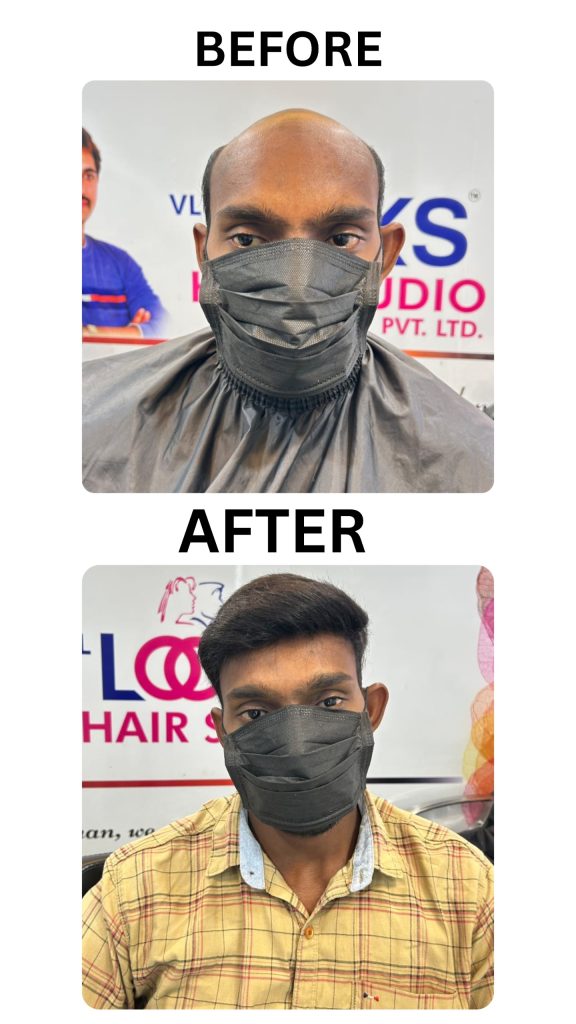
A client came into a hair studio in Hyderabad after trying to grow out his thinning crown for almost two years using oils and supplements he had seen advertised online. Nothing worked, and he was starting to avoid photos at family functions.
He explored both paths. A transplant consultation showed his donor density was decent but not strong enough to guarantee full crown coverage in a single session, which would have meant two procedures over two years.
He chose a custom non surgical system instead. Within a week, he had a full head of hair that matched his natural hairline, and he has kept up with maintenance every month since. He mentioned that the biggest change was not just how he looked, it was that he stopped thinking about his hair every time he walked into a room.
That is really the outcome both options are chasing, whichever route someone takes.
Expert Tips
If you are on the fence, try the non surgical route first. It is reversible, faster, and lets you experience having a full head of hair before making a permanent decision like surgery.
Do not judge a hair system by old assumptions. The technology and materials used today are nothing like what was available even 8 to 10 years ago.
For transplants, always ask how many grafts your specific case realistically needs, not a generic number the clinic quotes to everyone.
Whichever option you pick, invest in proper aftercare products. This applies to both transplanted hair and non surgical systems, and it genuinely extends how good your results look over time.
Frequently Asked Questions
Is hair transplant permanent while non surgical hair replacement is not?
Yes. Transplanted hair follicles are permanently relocated and continue growing naturally for life. Non surgical systems need periodic maintenance and eventual replacement as the hair unit ages.
Which option is cheaper, hair transplant or non surgical hair replacement?
Non surgical hair replacement has a lower upfront cost, but ongoing maintenance can make it more expensive over several years compared to a one time transplant cost.
Does a hair transplant hurt?
Most clinics use local anesthesia during the procedure, so pain during the process is minimal. Some soreness and mild discomfort during recovery is normal for the first week.
Can I swim or exercise with a non surgical hair system?
Yes, most modern systems are designed to handle regular activity including swimming, though intense workouts and prolonged water exposure may require more frequent maintenance visits.
How long does a hair transplant take to show full results?
Full results typically appear between 8 and 12 months after the procedure, following an initial shedding phase around the one month mark.
Is non surgical hair replacement noticeable to others?
A well made, properly fitted system from an experienced studio is very difficult to detect, even up close, especially with modern skin toned bases and natural hairline design.
Who is not a good candidate for hair transplant?
People with insufficient donor hair density, certain scalp conditions, or unrealistic expectations about coverage are generally not ideal transplant candidates.
Can I switch from non surgical hair replacement to a transplant later?
Yes, many people use non surgical solutions short term while planning or saving for a transplant later, and the two are not mutually exclusive over time.
Does insurance cover either option in India?
Generally no. Both hair transplant and non surgical hair replacement are considered cosmetic procedures and are typically not covered by standard health insurance policies in India.
How do I choose a good hair studio or clinic for either option?
Look for experience, real client testimonials, transparent pricing, and a willingness to give you an honest assessment rather than pushing you toward the most expensive option immediately.
Key Takeaways
- Hair transplant offers permanent results but requires a bigger upfront budget and a patient timeline of 8 to 12 months.
- Non surgical hair replacement gives instant results at a lower starting cost but needs ongoing maintenance every few weeks.
- Your donor hair density is often the deciding factor for whether transplant is even a realistic option.
- Calculate total cost over 3 to 5 years, not just the initial price, before deciding.
- Neither option is objectively better, the right choice depends on your budget, timeline, and lifestyle.
Conclusion
There is no universal winner between hair transplant and non surgical hair replacement. One gives you permanence and asks for patience. The other gives you speed and asks for consistency.
What matters is being honest with yourself about your budget, your timeline, and how much donor hair you actually have to work with. Make that assessment first, and the right option usually becomes obvious.
Your Next Step
If you are still unsure which path fits your situation, the smartest move is getting a real, honest assessment from an experienced hair studio before spending a rupee. Book a consultation, ask the tough questions, and let someone who does this daily give you a clear answer based on your actual hair, not a generic recommendation.