
Most people searching for Hair Patch Types spend hours going through confusing options, conflicting advice, and salons that push whatever they have in stock. The result? Wrong patch, wrong fit, wrong look, and a lot of wasted money.
This guide cuts through all of that. If you are dealing with hair thinning, a bald patch, or significant hair loss, knowing your options properly makes all the difference between a patch that looks natural and one that looks like a rug on your head.
Table of Contents
ToggleQuick Answer
There are mainly six types of hair patches available in 2026, including lace base patches, skin base patches, monofilament patches, silk base patches, combination base patches, and clip-on or wearable patches. Each type differs by base material, breathability, durability, and how natural it looks. The right choice depends on your scalp sensitivity, lifestyle, budget, and how long you plan to wear it.
What Exactly Is a Hair Patch?
A hair patch, also called a hair system or non-surgical hair replacement unit, is a custom or semi-custom hairpiece designed to cover areas of hair loss. It sits on the scalp and is attached using tape, glue, or clips.
Unlike wigs, hair patches are made to blend with your existing hair. The goal is that nobody should be able to tell you are wearing one.
The base of the patch is what really defines the experience. It determines how the patch feels on your skin, how long it lasts, how much it breathes, and how realistic the hairline looks. That is why understanding base types is the first thing anyone considering a hair patch should do.
Here is a situation that plays out constantly. Someone walks into a salon with moderate crown thinning, gets sold a thick skin base patch because it was the cheapest option available, and three weeks later they are sweating under it, dealing with itching, and wondering why the hairline looks off.
The wrong base for your skin type and lifestyle can make the whole experience miserable.
Choosing correctly means better comfort, longer wear time, a more natural appearance, and less maintenance headache. It also means spending money in the right place instead of replacing a bad patch every few months.
Types of Hair Patches Available in 2026
1. Lace Base Hair Patch
Lace base patches are made from a thin, breathable mesh material. The lace can be French lace, Swiss lace, or American lace, and each has its own level of fineness and durability.
What Makes It Different
Swiss lace is the finest. It virtually disappears against the scalp when applied correctly, which gives you the most realistic hairline out of all base types. French lace is slightly thicker and more durable, making it a better pick for people who are active or sweat a lot.
Best For
People who want the most natural-looking hairline, especially around the temples and front. Also great for people living in warm climates like Hyderabad or Chennai where scalp breathability matters.
Trade-off
Lace is delicate. It tears if you are rough with it, and it needs careful handling during application and removal. Lifespan is typically 4 to 8 weeks with proper care.
Cost Range in India
Rs. 8,000 to Rs. 25,000 depending on hair type and customization.
2. Skin Base Hair Patch (Poly Base)
Skin base patches use a thin polyurethane material that mimics the look and feel of skin. When the patch is placed on the scalp, the base becomes nearly invisible because it blends with your skin tone.
What Makes It Different
The poly base allows hair to be injected directly, which gives it a very clean, natural part line. It looks particularly good in photos and under bright lighting.
Best For
People who want a clean scalp appearance, those with sensitive lace allergies, and anyone who needs something more durable than lace for daily use.
Trade-off
Skin base patches do not breathe as well as lace. On a hot day or during exercise, you will feel it. They also tend to need more frequent cleaning because sweat and oil accumulate underneath. Lifespan is around 6 to 10 weeks.
Cost Range in India
Rs. 6,000 to Rs. 20,000.
3. Monofilament Base Hair Patch
Monofilament base patches use a fine nylon or polyester mesh where each hair strand is individually hand-tied. This construction allows the hair to move freely in all directions, which is what gives it a very natural look.
What Makes It Different
The hand-tied method means the hair moves like it is growing from the scalp. You can part it almost anywhere, style it multiple ways, and it will still look real. It is one of the most versatile base types available.
Best For
People who style their hair frequently, those with an active lifestyle, and anyone who needs multi-directional parting for their hairstyle.
Trade-off
More expensive than lace or skin base because of the hand-tied construction. Also heavier than Swiss lace, so it may feel slightly less natural in terms of scalp sensation.
Cost Range in India
Rs. 12,000 to Rs. 35,000.
4. Silk Base Hair Patch
Silk base patches have a three-layer construction. A silk layer sits on top, a monofilament layer in the middle, and a poly layer at the bottom. Hair is knotted through all three layers.
What Makes It Different
The silk top layer completely hides the knots underneath, which makes it look like hair is literally growing out of your scalp. No other base type replicates this as convincingly.
Best For
People who want the most realistic scalp illusion. This is the go-to option for those who have total or near-total hair loss and want the appearance of a full scalp.
Trade-off
The multi-layer construction makes silk base patches thicker and heavier than lace or mono bases. They are also significantly more expensive and can feel warm in hot weather.
Cost Range in India
Rs. 18,000 to Rs. 50,000+.
5. Combination Base Hair Patch
Combination base patches use two or more base materials on a single patch. A common example is a lace front with a poly perimeter. The lace gives you a natural hairline, while the poly edges make it easier to apply tape or glue and increase durability around the attachment points.
What Makes It Different
You get the best of multiple base types in one unit. The hairline looks realistic, the edges hold well, and the overall patch lasts longer than a full lace base.
Best For
People who want both a natural look and practical durability. This is what most experienced hair replacement users settle on after trying individual base types.
Trade-off
Slightly more expensive than single-base patches and can be harder to source because they need to be custom ordered in many cases.
Cost Range in India
Rs. 10,000 to Rs. 40,000 depending on the combination and hair type.
6. Clip-On and Wearable Hair Patches
These patches attach with clips or integration systems and are not bonded to the scalp with tape or glue. They are meant to be worn during the day and removed at night.
What Makes It Different
No adhesive means no scalp preparation, no bonding maintenance, and no removal process. You put it on, you take it off.
Best For
People who want a low-commitment solution, those with mild to moderate hair thinning who are not ready for full bonding systems, or people who want something for occasional use.
Trade-off
Clip-ons do not blend as seamlessly as bonded patches, and they are not suitable for swimming, heavy rain, or intense physical activity. They can also feel loose if not properly fitted.
Cost Range in India
Rs. 3,000 to Rs. 15,000.
Comparison Table: Hair Patch Types at a Glance
| Type | Breathability | Natural Look | Durability | Price Range (INR) | Best For |
|---|---|---|---|---|---|
| Lace Base | Very High | Excellent | Low-Moderate | 8,000 to 25,000 | Natural hairline, hot climates |
| Skin Base | Low | Very Good | Moderate | 6,000 to 20,000 | Clean scalp look, durability |
| Monofilament | High | Very Good | High | 12,000 to 35,000 | Active lifestyle, styling flexibility |
| Silk Base | Moderate | Best | Moderate | 18,000 to 50,000+ | Total hair loss, ultra-realistic look |
| Combination | Moderate-High | Excellent | High | 10,000 to 40,000 | Balanced look and durability |
| Clip-On | High | Good | Varies | 3,000 to 15,000 | Low commitment, occasional use |
Hair Type Options Inside These Patches
Beyond the base, the hair inside the patch matters just as much.
Human Hair vs. Synthetic Hair
Human hair patches cost more but allow you to heat style, color, and treat them almost like your own hair. Synthetic hair patches are cheaper, hold their style well in humidity, but cannot handle heat and need to be replaced more frequently.
For anyone in India where humidity is a real factor, human hair with a good lace or combination base is generally the smarter long-term investment.
Indian Hair vs. Chinese Hair vs. European Hair
Most patches available in India use Indian Remy hair or Chinese hair. Indian Remy hair matches the natural texture of most Indian scalps far better than Chinese or European hair. If you are getting a custom patch made in Hyderabad or Vizag, request Indian Remy hair specifically for the most seamless blend.
Common Mistakes People Make When Choosing
Choosing on Price Alone A Rs. 4,000 patch might seem like a deal until it starts peeling at the edges in two weeks. Investing in the right base for your skin and lifestyle saves money in the long run.
Ignoring Scalp Sensitivity People with oily or sensitive scalps who go with thick skin base patches end up with constant itching and clogged pores. A lace or mono base would have served them much better.
Not Getting a Professional Consultation Ordering a patch online without professional measurement and color matching is a common mistake. The density, color, curl pattern, and base size all need to match your natural hair precisely. One wrong measurement and the patch never looks right.
Skipping Maintenance Hair patches need regular cleaning, re-bonding, and conditioning. Neglecting this shortens the lifespan dramatically and the patch starts looking unnatural far sooner than it should.
Real-Life Example
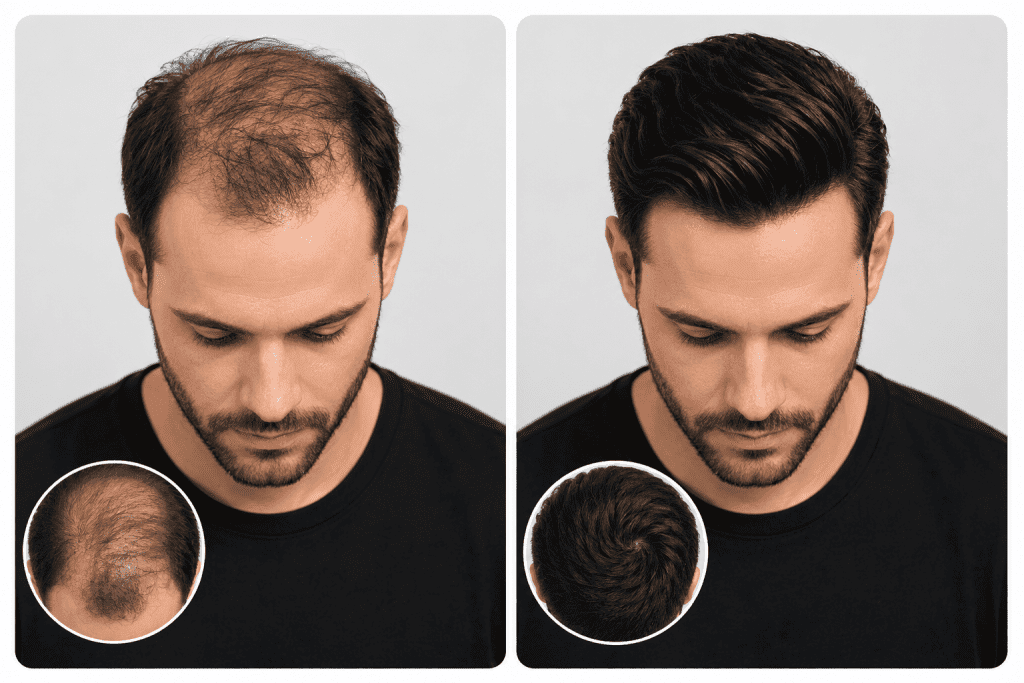
A 34-year-old IT professional from Hyderabad with significant crown thinning came in wanting a low-maintenance solution. He traveled frequently and could not commit to regular salon visits.
After consultation, a combination base patch was recommended. Lace front for a natural hairline, poly perimeter for easy tape application, and Indian Remy hair matched to his natural hair density and color.
He learned a basic removal and reapplication process. With biweekly maintenance at home and a monthly salon visit, the patch has lasted over three months per unit with zero visible detection issues. His feedback: “People I work with for years don’t know. That’s all that matters.”
Expert Tips Before You Buy
Get a scalp analysis first. Oily scalps need breathable bases. Dry or sensitive scalps need softer, lighter materials. A good salon will not skip this step.
Ask for a patch trial before committing. Some salons allow you to try a patch for a day before customization begins. Use this if it is available.
Understand the maintenance schedule upfront. Different base types require different upkeep intervals. Make sure what is being recommended actually fits your lifestyle.
Do not confuse a hair system with a wig. Hair systems are custom fitted and bonded. They are a different category entirely and should be treated as such.

Frequently Asked Questions
How long does a hair patch last?
It depends on the base type and maintenance. Lace base patches typically last 4 to 8 weeks. Skin base patches last 6 to 10 weeks. Monofilament and combination bases can last 3 to 6 months with proper care.
Which type of hair patch looks most natural?
Silk base patches give the most realistic scalp illusion. For hairline naturalness specifically, Swiss lace is the most convincing. Combination bases offer the best overall natural look for everyday wear.
Is a hair patch suitable for swimming?
Bonded patches with waterproof tape can handle swimming, but frequent water exposure shortens the lifespan. Clip-on patches should not be worn while swimming.
Can I sleep with a hair patch on?
Yes, bonded patches can be worn while sleeping. Use a satin pillowcase to reduce friction and avoid tangling.
How much does a good hair patch cost in Hyderabad?
A quality hair patch in Hyderabad typically costs between Rs. 8,000 and Rs. 35,000 depending on the base type, hair quality, and customization level.
What is the difference between a hair patch and a wig?
A hair patch or hair system covers a specific area of hair loss and is bonded to the scalp. A wig covers the entire head and is usually removable. Hair patches blend with existing hair while wigs replace all of it.
Will anyone be able to tell I am wearing a hair patch?
Not if it is done correctly. A well-fitted, properly maintained patch matched to your hair color and texture is virtually undetectable in daily life.
How often does a hair patch need to be maintained?
Basic cleaning every one to two weeks, re-bonding every two to four weeks depending on the base type, and a full professional maintenance visit once a month is standard.
Key Takeaways
- There are six main types of hair patches: lace base, skin base, monofilament, silk base, combination base, and clip-on
- Base type determines breathability, natural appearance, durability, and maintenance needs
- Silk base gives the most realistic scalp illusion while Swiss lace gives the best hairline
- Indian Remy human hair blends best with most Indian scalp types
- A consultation and scalp analysis before purchase prevents most common mistakes
- Climate, lifestyle, and maintenance commitment should all factor into the decision
- Prices in India range from Rs. 3,000 for basic clip-ons to Rs. 50,000+ for premium custom silk base units
Conclusion
Choosing a hair patch is not about picking the cheapest option or going with whatever the salon pushes first. It is about understanding what your scalp needs, how you live, and what kind of maintenance you are realistically going to do.
The right patch, done well, genuinely changes things. Not just how you look, but how you feel walking into a room. That part is worth getting right.
Ready to Find the Right Hair Patch for You?
If you are in Hyderabad or Vizag and want a proper consultation before making a decision, reach out to a certified non-surgical hair replacement specialist who will assess your scalp, match your hair, and recommend the right patch for your lifestyle.
Do not guess your way through this. One proper consultation can save you months of frustration.