
Is Non Surgical Hair Replacement Safe? Somebody messages a hair studio at 11 PM with the same question, almost every single time. “Is this actually safe for my scalp, or am I going to regret this in six months?”
It’s a fair worry. Hair loss already messes with someone’s confidence. The last thing anyone wants is to fix one problem and create a new one, like a skin allergy, scalp damage, or hair that looks worse than before they started.
So let’s actually answer it, properly, without the sales pitch.
Table of Contents
ToggleIntroduction
Non-surgical hair replacement has become one of the most searched hair loss solutions in cities like Hyderabad and Vizag over the last couple of years. People are tired of expensive transplants that take months to show results, and they want something that works fast without a scalpel anywhere near their head.
But “non-surgical” doesn’t automatically mean “risk-free.” There’s a difference between a system applied by a trained technician using quality materials, and a quick fix done by someone cutting corners to save cost.
In this guide, you’ll get a clear picture of how non-surgical hair replacement actually works, what makes it safe (or unsafe), what mistakes most people make before they even sit in the chair, and the questions worth asking before you commit.
Quick Answer
Non-surgical hair replacement is generally safe when done by trained professionals using skin-friendly, breathable bases and proper hygiene practices. Risks are low and mostly limited to scalp irritation or allergic reactions to adhesives, both of which are avoidable with the right products and regular maintenance.
What Is Non-Surgical Hair Replacement?
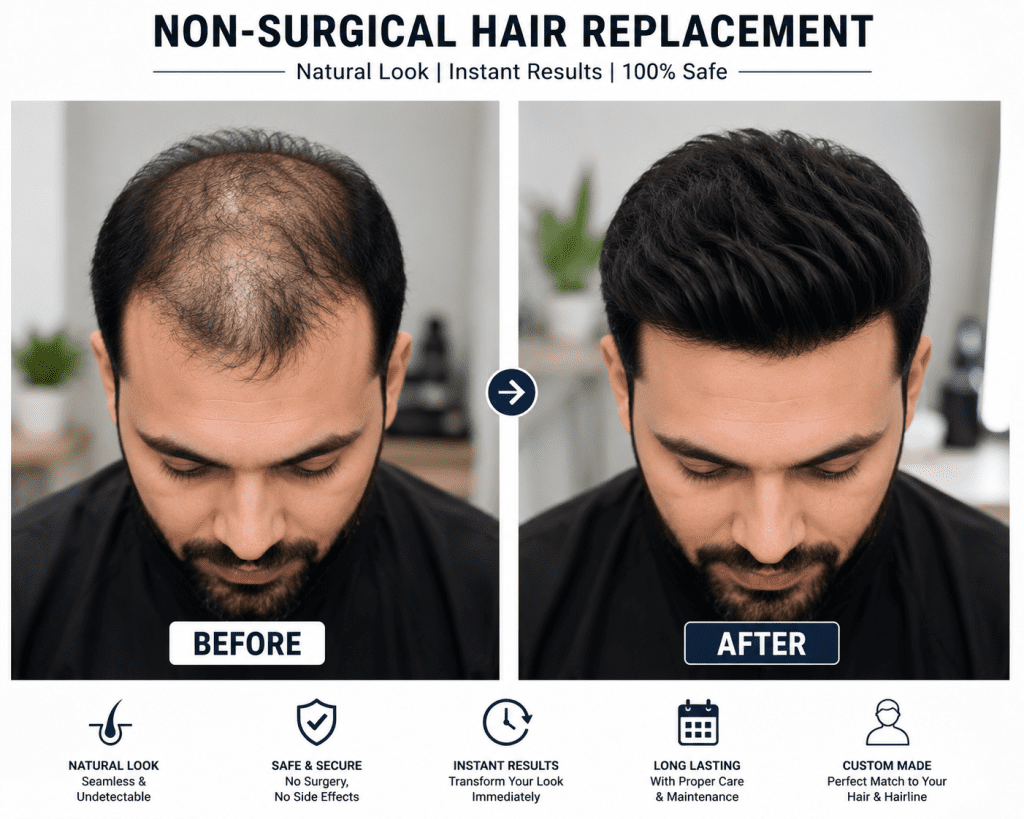
Non-surgical hair replacement is a method of restoring hair without any incisions, stitches, or surgical procedure involved. A custom hairpiece, often called a hair system or hair patch, is attached to the scalp using bonding, tape, or clips, matching the person’s natural hair color, density, and hairline.
Think of it less like a wig and more like a second skin that blends with whatever hair you already have. A good technician studies your scalp, hair texture, and hairline before creating something that looks like it’s growing straight out of your head, not sitting on top of it.
A simple real-world example: someone with thinning at the crown gets a custom base made from a thin, breathable material, color-matched to their existing hair, and bonded to the scalp using a medical-grade adhesive. From three feet away, nobody can tell the difference.
Why Is It Important?
The appeal isn’t just cosmetic. For a lot of men and women, hair loss quietly chips away at how they show up at work, in social settings, even in their own mirror.
Non-surgical hair replacement matters because it gives people their hairline back almost instantly, without the six to twelve month wait that comes with a transplant. There’s no downtime, no recovery period, no visible scarring.
It’s also reversible. If someone changes their mind, the system can be removed without any permanent change to the scalp. That flexibility is something surgical options simply can’t offer.
Complete Guide: What Actually Makes It Safe (Or Not)
The Base Material
What It Means
The base is the foundation of the hair system, usually made from materials like lace, polyurethane (skin base), or a mono mesh.
Why It Matters
Cheap, non-breathable bases trap sweat and oil against the scalp. Over weeks, that creates the perfect environment for fungal infections, itching, and bad odor.
How To Do It
Choose a studio that uses breathable, medical-grade base materials, not the lowest-cost option available. Ask directly what the base is made of before agreeing to anything.
Example
A thin poly base allows airflow and feels almost invisible on the scalp, while a thick, low-grade synthetic base tends to feel hot and heavy within hours.
Pro Tip
If a studio can’t clearly explain what material they use, that’s already a red flag worth noting.
The Adhesive or Bonding Agent
What It Means
This is what holds the hair system to the scalp, ranging from medical-grade tapes to liquid bonding glues.
Why It Matters
Low-quality adhesives are the single biggest cause of skin irritation in non-surgical hair replacement. Some contain harsh chemicals that aren’t meant for prolonged skin contact.
How To Do It
A reputable studio will do a small patch test before full application, especially for first-time clients. This single step catches most allergic reactions before they become a real problem.
Example
Someone with sensitive skin might react to a standard bonding glue with mild redness, which a patch test would reveal in 24 to 48 hours, well before a full application.
Pro Tip
Never let anyone skip the patch test, no matter how rushed the appointment feels.
Hygiene and Maintenance Routine
What It Means
This covers how often the system is cleaned, removed, and reapplied, along with how the scalp underneath is cared for.
Why It Matters
Most safety issues don’t come from the system itself. They come from poor maintenance, going weeks without cleaning, or never letting the scalp breathe.
How To Do It
Follow a regular cleaning schedule, usually every two to four weeks depending on the bonding method, where the system is removed, the scalp is cleaned thoroughly, and reapplied fresh.
Example
A client who maintains their system properly every three weeks rarely reports any irritation, while someone who stretches it to two months almost always shows scalp buildup.
Pro Tip
Treat maintenance appointments like a non-negotiable part of the process, not an optional extra.
Choosing the Right Technician or Studio
What It Means
The skill and training of the person applying the system matters as much as the system itself.
Why It Matters
Even the best materials can cause problems in untrained hands, through poor application, wrong adhesive choice, or rushed work.
How To Do It
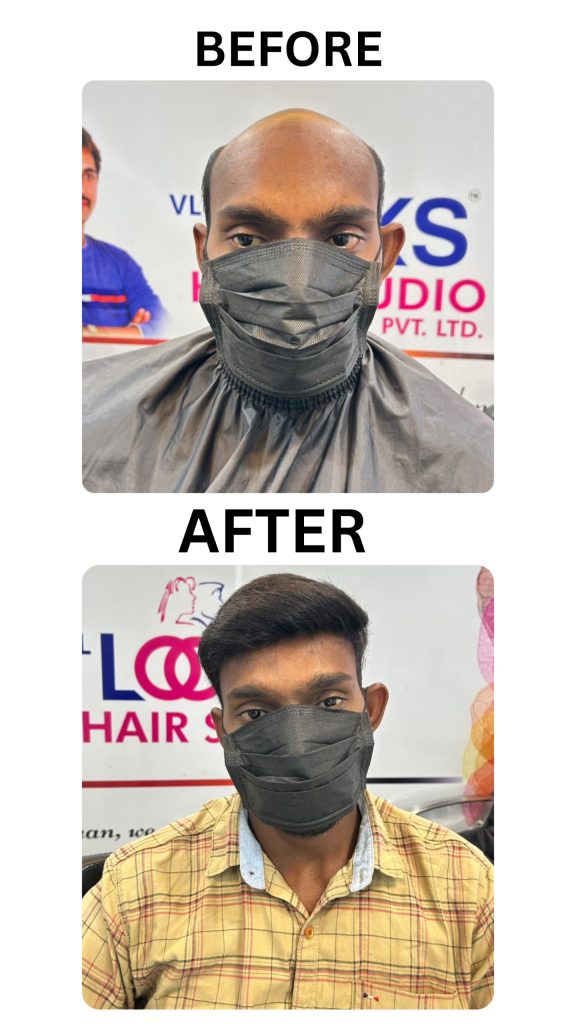
Look at before and after photos of real clients, check how long the studio has been operating, and ask how they handle scalp sensitivity or allergic reactions if they come up.
Example
A studio that’s been serving clients across Hyderabad or Vizag for several years has likely refined their process through hundreds of applications, which shows in how clean and natural the final result looks.
Pro Tip
A genuine studio won’t pressure you into booking the same day. They’ll happily answer questions first.
Common Mistakes People Make
Mistake: Choosing the cheapest option available without checking material quality.
Impact: Leads to scalp irritation, poor blending, and a system that needs replacing within months.
Solution: Compare based on material and technician experience, not just price.
Mistake: Skipping the patch test before full bonding.
Impact: Increases the chance of an undetected allergic reaction spreading across the scalp.
Solution: Insist on a patch test, even if it adds a day to the timeline.
Mistake: Going too long between maintenance visits.
Impact: Causes buildup, odor, and in some cases mild infections under the base.
Solution: Stick to the recommended maintenance schedule without stretching it out.
Mistake: Sleeping, swimming, or exercising heavily without following the studio’s aftercare advice.
Impact: Loosens bonding faster and shortens the lifespan of the system.
Solution: Ask for a clear aftercare sheet and actually follow it.
Best Practices
Get a patch test done before your first full application, every single time, even if you’ve used hair systems before with a different studio.
Stick to a consistent maintenance schedule rather than waiting until something feels wrong.
Ask the studio what happens if you have a reaction. Their answer tells you a lot about how seriously they take safety.
Keep the scalp clean between maintenance visits using products the studio actually recommends, not random shampoos picked off a shelf.
Tools and Resources: Comparing Your Options
| Method | Surgical? | Recovery Time | Typical Cost Range (INR) | Maintenance Needed |
|---|---|---|---|---|
| Hair Patch / Bonding | No | None | 15,000 to 35,000 (per application) | Every 2 to 4 weeks |
| Hair Weaving | No | None | 20,000 to 40,000 | Every 3 to 6 weeks |
| Clip-In Hair System | No | None | 10,000 to 25,000 | Minimal, daily removal |
| FUE Hair Transplant | Yes | 7 to 14 days | 60,000 to 1,50,000+ | One-time, with follow-up |
Prices vary depending on hair quality, base type, and studio location, so treat this table as a general benchmark rather than a fixed quote.
Real-Life Example
A 34-year-old IT professional from Hyderabad, let’s call him Ravi, had been dealing with crown thinning for about three years before he looked into non-surgical hair replacement.
His main worry wasn’t the look. It was whether his scalp could handle wearing something every day without breaking out. The studio he visited ran a 48-hour patch test first, which came back clear, then fitted him with a breathable poly base color-matched to his natural hair.
For the first two weeks, he noticed mild tightness around the hairline, which the studio explained was normal as the scalp adjusted. By the third maintenance visit, that feeling was gone entirely. A year later, he’s still using the same studio, on the same four-week maintenance cycle, with no irritation reported since.
His situation isn’t unusual. Most safety concerns show up early, get addressed through proper aftercare, and don’t return once a routine is established.
Expert Tips
If you have a history of skin allergies, mention it upfront. Studios can adjust the adhesive type accordingly instead of using their default option.
Avoid applying any new skincare or haircare product close to your application date. Switching products right before bonding makes it harder to identify what’s actually causing a reaction if one shows up.
Ask to see the actual base material before it’s applied, not just photos from a catalog. What looks fine in a picture doesn’t always feel fine on skin.
If a studio offers a same-day application with no consultation or patch test, treat that as a warning sign rather than convenience.
Frequently Asked Questions
Is non-surgical hair replacement safe for sensitive skin?
Yes, as long as a patch test is done beforehand and the studio uses hypoallergenic, medical-grade adhesives suited to sensitive skin.
Can non-surgical hair replacement cause hair loss underneath?
It shouldn’t, when applied and maintained correctly. Issues usually come from poor hygiene or leaving the system on for too long without removal.
How long does a hair system last before it needs replacing?
Most systems last three to six months with proper care, though this depends on the base quality and how often it’s worn.
Does non-surgical hair replacement damage natural hair?
No, when the technician follows correct bonding and removal techniques. Damage typically only happens with rough handling or low-quality adhesives.
Is it noticeable that I'm wearing a hair system?
A well-fitted, color-matched system from an experienced studio is designed to be undetectable, even up close Is Non Surgical Hair Replacement Safe
Can I exercise or swim with a hair system on?
Is Non Surgical Hair Replacement Safe Light exercise is usually fine, but swimming and heavy sweating can loosen the bond faster, so check your studio’s specific aftercare guidance.
What's the difference between hair bonding and hair weaving?
Bonding uses adhesive to attach the system directly to the scalp, while weaving involves stitching the base into existing hair, often lasting slightly longer between maintenance visits.
Is non-surgical hair replacement cheaper than a hair transplant?
The upfront cost is usually lower, but it requires ongoing maintenance expenses, so total cost over a few years can end up comparable to a one-time transplant Is Non Surgical Hair Replacement Safe
Who should avoid non-surgical hair replacement?
People with active scalp infections, untreated skin conditions, or severe allergies to common bonding agents should consult a dermatologist before proceeding.
How do I know if a hair studio is trustworthy?
Check real client reviews, ask for before and after photos of actual clients, and see whether they insist on a patch test before full application.
Key Takeaways
- Non-surgical hair replacement is safe when done with quality materials, proper technique, and regular maintenance.
- Most risks come from skipped patch tests, poor hygiene, or cheap adhesives, not the method itself.
- Breathable base materials reduce the chance of scalp irritation significantly.
- Maintenance every two to four weeks keeps both the system and the scalp healthy.
- Choosing an experienced studio matters as much as choosing the right product.
Conclusion
Non-surgical hair replacement isn’t risky by nature. It becomes risky when corners get cut, whether that’s skipping a patch test, using a low-grade adhesive, or going months without proper maintenance.
Done right, it’s one of the fastest, least invasive ways to get a natural-looking hairline back, without surgery, without downtime, and without the scalp problems people often worry about going in.
CTA
If you’re still unsure whether non-surgical hair replacement is right for you, the safest next step is a real consultation, not a guess based on what you’ve read online. Book a scalp assessment with a studio that actually takes the time to explain their process, patch test included, before anything gets applied.