
Hair loss is one of those things nobody really wants to talk about, but almost everyone quietly worries about. You notice more strands on the pillow. Your hairline looks slightly different in the morning light. And then the slow spiral of searching for answers begins.
The good news? There are more natural, non-invasive options available today than most people realize. And not all of them require surgery, chemicals, or a lifetime prescription.
This blog walks you through everything you need to know, from what counts as a natural hair loss solution to which options actually work, and how to figure out what makes sense for your situation.
Table of Contents
ToggleQuick Answer
The most natural hair loss solutions today include non-surgical hair replacement systems, scalp micropigmentation, PRP therapy, and lifestyle-based treatments like nutrient correction and DHT-blocking natural supplements. For people who want immediate, non-invasive results without surgery or side effects, custom hair replacement systems made from real human hair are widely considered the most natural-looking and low-risk option.
What Counts as a "Natural" Hair Loss Solution?
This is where things get a little confusing. When people say “natural,” they usually mean one of two things.
The first is natural-looking, meaning hair that blends seamlessly with your existing hair and doesn’t look fake or patchy. The second is natural in approach, meaning no surgery, no harsh chemicals, and minimal risk to your body.
The best solutions check both boxes. A surgical hair transplant, for example, uses your own follicles but it still involves incisions, recovery time, and a significant cost. PRP (Platelet Rich Plasma) therapy uses your own blood but requires clinical sessions. And pharmaceutical options like minoxidil or finasteride come with side effects that not everyone is comfortable with.
Non-surgical hair replacement, on the other hand, gives you natural-looking results with zero downtime, zero surgery, and zero medication.
Why People Are Moving Away From Traditional Hair Loss Treatments
The idea that you have to either go bald or go under the knife is outdated. A lot of people tried minoxidil and didn’t see results. Some tried transplants and weren’t happy with the density. Others just don’t want to take medication indefinitely.
What changed things was the quality of modern hair systems. Ten years ago, a hair patch looked like a hair patch. Today, custom-made hair systems using real Indian Remy hair or European hair are virtually undetectable, even up close.
This shift happened because:
Manufacturing got more precise. Thin skin bases, lace fronts, and mono mesh constructions all mimic natural scalp appearance.
Customization improved. Match factor for hair color, texture, curl pattern, and density is now very accurate.
Bonding technology evolved. Modern adhesives and tapes hold securely through sweat, swimming, and daily life.
People who once felt self-conscious about hair loss now walk out of studios looking and feeling completely like themselves.
The Most Natural Hair Loss Solutions Available Today
1. Non-Surgical Hair Replacement Systems
This is the most popular option for good reason. A custom hair system is built to match your natural hair color, density, texture, and growth direction. It’s attached to your scalp using medical-grade adhesive or clips, and when done well, nobody can tell.
What makes it natural-looking:
Real human hair is used in most premium systems
The base material (lace, thin skin, or mono) is designed to replicate your scalp
Skilled stylists cut and blend the hair to match your existing hair
Best for: People experiencing moderate to severe hair loss who want immediate, non-invasive coverage
Typical maintenance: Every 4 to 6 weeks for reattachment and cleaning
Cost in India: Starts around Rs. 8,000 to Rs. 25,000 depending on base type, hair quality, and studio
2. PRP Therapy (Platelet Rich Plasma)
PRP uses your own blood. A small sample is drawn, processed to concentrate the platelets, and then injected into the scalp. The growth factors in the platelets are thought to stimulate dormant hair follicles.
What makes it natural in approach:
No synthetic chemicals
Uses your body’s own healing mechanism
No major side effects for most people
Best for: Early-stage hair thinning where follicles are still alive but inactive
Sessions required: Usually 3 to 6 sessions spaced 4 weeks apart, followed by maintenance
Cost in India: Roughly Rs. 5,000 to Rs. 15,000 per session depending on the clinic
Note: PRP works better when started early. If the follicle is completely dead, PRP won’t bring it back.
3. Scalp Micropigmentation (SMP)
SMP is essentially a cosmetic tattoo for the scalp. Tiny pigment dots are placed on the scalp to replicate the look of shaved hair follicles. It doesn’t restore actual hair but creates the appearance of a closely shaved full head of hair.
Best for: Men comfortable with a shaved-head look, or as a complement to a hair system for extra density at the hairline
What makes it natural-looking:
Done well, it’s very convincing at normal viewing distances
Can camouflage scars from transplant surgeries
Low maintenance once healed
Cost in India: Rs. 15,000 to Rs. 60,000 depending on the area covered
4. Natural Supplements and Dietary Changes
Hair is made of keratin, and your body needs specific nutrients to produce it consistently. Deficiencies in iron, vitamin D, zinc, biotin, and protein are more common causes of hair loss than most people think.
Natural DHT blockers that show some evidence:
Saw palmetto extract
Pumpkin seed oil
Green tea extract (EGCG)
Ashwagandha (helps reduce cortisol-related hair loss)
Dietary changes that support hair health:
Increase protein intake (eggs, lentils, paneer, chicken)
Add iron-rich foods (spinach, dates, beetroot)
Reduce sugar and processed food (they spike DHT and inflammation)
Best for: People in early stages of hair thinning, or as a long-term maintenance plan alongside other solutions
Honest note: Supplements work slowly, and they work best when the deficiency is real. Get blood work done before spending money on random biotin pills.
5. Low-Level Laser Therapy (LLLT)
This is a newer option that uses red light wavelengths to stimulate hair follicle activity. It’s available as in-clinic devices and also as at-home helmets or combs.
What makes it natural in approach:
No chemicals, no injections
Painless and non-invasive
Increases blood flow to follicles
Best for: Androgenetic alopecia (pattern baldness) in early stages
Cost: At-home laser combs start around Rs. 8,000. Clinical grade devices cost more per session.
Realistic expectation: Results take 4 to 6 months of consistent use and are modest for most people.
Comparing Your Options
| Solution | Natural in Look | Natural in Approach | Time to Results | Cost Range (India) | Surgery Required |
|---|---|---|---|---|---|
| Hair Replacement System | Very High | Yes | Immediate | Rs. 8,000 to Rs. 25,000 | No |
| PRP Therapy | Moderate | Yes | 3 to 6 months | Rs. 5,000 to Rs. 15,000/session | No |
| Scalp Micropigmentation | High (shaved look) | Yes | 2 to 3 sessions | Rs. 15,000 to Rs. 60,000 | No |
| Supplements and Diet | Low (gradual) | Very Natural | 6 to 12 months | Low | No |
| LLLT | Moderate | Yes | 4 to 6 months | Rs. 8,000 onward | No |
| Hair Transplant | High (long term) | Partially | 12 to 18 months | Rs. 50,000 to Rs. 2,00,000 | Yes |
Common Mistakes People Make When Looking for Natural Solutions
Waiting too long. Most natural treatments (PRP, LLLT, supplements) work on follicles that are still alive and functioning. The longer you wait, the fewer options you have.
Buying random products online. The internet is full of oils, serums, and powders making wild claims. Most of them do very little. Stick to solutions with clinical backing or proven real-world results.
Ignoring the underlying cause. Hair loss from thyroid issues, PCOS, iron deficiency, or chronic stress needs the root cause addressed first. No hair system or supplement will fix a medical problem.
Not doing a patch test. If you’re using adhesive for a hair system or trying a new product on your scalp, always test first. Scalp sensitivity reactions are more common than people expect.
Choosing the wrong studio. A cheap hair system fitted by someone who doesn’t know what they’re doing will look fake. The quality of the artisan matters as much as the quality of the product.
Best Practices for Natural-Looking Hair Restoration
- Get a proper scalp and hair analysis done before choosing any solution. A good clinic won’t rush this step.
- If opting for a hair system, go for real human hair over synthetic, especially if you live in a hot and humid climate like Hyderabad or Vizag.
- Combine approaches where it makes sense. For example, PRP plus a hair system covers both the cosmetic need and the biological one.
- Follow the maintenance schedule. Hair systems that aren’t cleaned and reattached on time can cause scalp issues and look patchy.
- Protect your remaining hair. Whether or not you use a hair system, keeping the hair you have in good health should always be part of the plan.
Real-Life Example: From Thinning to Confident
Ravi, a 34-year-old software professional from Hyderabad, had been dealing with hair thinning since his late twenties. He tried minoxidil for two years with minimal results. He considered a transplant but wasn’t ready for the recovery period or the cost.
He visited a hair studio and opted for a custom non-surgical hair system. The consultation took about 45 minutes. The fitting happened over two sessions. By the end of it, he looked at photos from a year ago and barely recognized the difference.
What surprised him most wasn’t just how it looked. It was that he could swim, sweat at the gym, and ride a bike without worrying. Six months in, he also started PRP to slow the natural hair loss underneath. He’s maintained both since.
That combination of immediate results with a long-term plan is exactly how most specialists recommend approaching this.
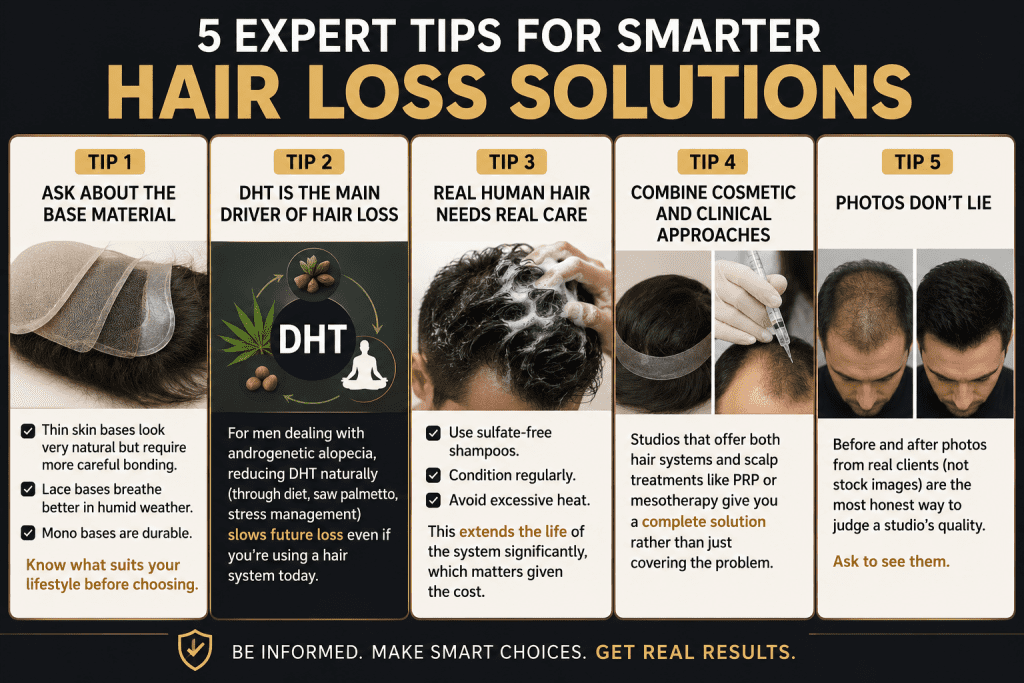
Expert Tips
Tip 1: Ask about the base material before committing to a hair system.
Thin skin bases look very natural but require more careful bonding. Lace bases breathe better in humid weather. Mono bases are durable. Know what suits your lifestyle before choosing.
Tip 2: DHT is the main driver of pattern hair loss.
For men dealing with androgenetic alopecia, reducing DHT naturally (through diet, saw palmetto, stress management) slows future loss even if you’re using a hair system today.
Tip 3: Real human hair systems need the same care as your bio hair.
Use sulfate-free shampoos. Condition regularly. Avoid excessive heat. This extends the life of the system significantly, which matters given the cost.
Tip 4: Combine cosmetic and clinical approaches.
Studios that offer both hair systems and scalp treatments like PRP or mesotherapy give you a complete solution rather than just covering the problem.
Tip 5: Photos don’t lie.
Before and after photos from real clients (not stock images) are the most honest way to judge a studio’s quality. Ask to see them.
Frequently Asked Questions
What is the most natural-looking non-surgical hair loss solution?
Custom non-surgical hair replacement systems using real human hair are widely considered the most natural-looking option. When fitted by an experienced professional, they are virtually undetectable.
Can hair loss be reversed naturally without surgery?
In some cases, yes. If the hair loss is caused by nutritional deficiency, stress, or hormonal imbalance, addressing the root cause combined with PRP therapy or LLLT can restore growth. However, if follicles are permanently damaged, reversal without surgery is unlikely.
Is PRP therapy effective for hair regrowth?
PRP has shown positive results in clinical studies for androgenetic alopecia and alopecia areata. It works best in early-stage hair loss where follicles are still present but underactive.
How long does a non-surgical hair system last?
A quality hair system made with real human hair typically lasts 6 to 12 months with proper care. The base material and maintenance frequency play a big role in longevity.
Is hair bonding safe for the scalp?
Medical-grade adhesives used in professional hair studios are formulated to be skin-safe. Regular cleaning of the scalp and proper maintenance prevents any buildup or irritation.
What are the best foods to eat for hair growth?
Protein-rich foods like eggs, lentils, fish, and paneer are essential. Iron (spinach, dates), zinc (pumpkin seeds, chickpeas), and vitamin D (sunlight, fortified foods) also directly support hair follicle health.
Can women use non-surgical hair replacement systems?
Absolutely. Hair toppers and full cap systems for women are widely available. They address diffuse thinning, alopecia, and post-chemotherapy hair loss effectively.
How often should a hair system be serviced?
Most professionals recommend a service appointment every 4 to 6 weeks. This includes removing the system, cleaning the scalp, reapplying adhesive, and conditioning the hair.
What is the difference between hair weaving and hair bonding?
Hair weaving typically involves attaching a weft of hair to existing strands using thread or clips. Hair bonding uses adhesive to attach a hair patch or system directly to the scalp. Bonding generally gives a more natural and secure result for larger coverage areas.
Is scalp micropigmentation permanent?
SMP fades over time (usually 4 to 6 years) and may need touch-ups. It is not truly permanent like a traditional tattoo, but it is long-lasting. It can also be lightened or removed if needed.
Key Takeaways
- The most natural-looking and non-invasive hair loss solution currently available is a custom non-surgical hair replacement system using real human hair.
- PRP therapy, LLLT, and natural supplements are effective for early-stage hair thinning but require time and consistency.
- Addressing the underlying cause of hair loss (nutritional, hormonal, or stress-related) is essential before spending on any topical or cosmetic solution.
- Combining a hair system for immediate results with clinical treatments for long-term hair health is the approach most specialists recommend.
- The quality of the studio and the skill of the professional matter enormously in how natural the final result looks.
- Waiting too long reduces your options significantly, especially for solutions that require living follicles.
Conclusion
Hair loss doesn’t have a single universal answer, and anyone who tells you otherwise is probably trying to sell you something.
What exists today is a genuinely impressive range of options. Some are immediate and cosmetic. Some are gradual and biological. The best outcomes usually come from combining both.
If you’ve been putting off dealing with this, the right time to start looking into your options is now, before the choices narrow.
Ready to Explore Your Hair Restoration Options?
If you’re in Hyderabad or Visakhapatnam and want to understand what solution fits your specific situation, speak with a specialist who will actually look at your scalp, understand your lifestyle, and give you honest advice.
Book a free consultation with a hair restoration expert today and walk out knowing exactly where you stand.