
Table of Contents
ToggleWhat This Is About
You’re in the bathroom, phone torch on, tilting your head under the light to check if your hairline moved again. It has. Just a little. Enough that you noticed.
Then comes the Google search at midnight: Best solution for baldness without surgery. Because surgery sounds permanent, expensive, and honestly, a bit scary. Needles, scabs, weeks of hiding under a cap, and a result you won’t even see for a year.
Good news. You don’t need to go anywhere near an operating table to get your hair back. Thousands of men and women across India are choosing non surgical routes for hair loss, and a lot of them are getting results that look completely natural in public, gym, photos, everywhere.
This guide breaks down what actually works, what’s a waste of money, and how to pick the right option for your situation without falling for marketing gimmicks.
Baldness without surgery basically means treating or covering hair loss using methods that don’t involve cutting the scalp or transplanting follicles. That covers a wide range, from medicines you apply or swallow, to laser devices, to non surgical hair replacement systems also known as hair patches or hair bonding.
Why does this matter so much right now? Because hair transplant surgery isn’t right for everyone. It’s costly, it needs enough donor hair at the back of your head, recovery takes time, and results vary clinic to clinic. A lot of people simply want their hair looking full again this month, not next year.
By the end of this piece, you’ll know the main non surgical options on the table, how each one actually works, which mistakes waste people’s money, and how to pick a path that fits your hair loss pattern, your budget, and your patience level.
Quick Answer
The most reliable non surgical solution for baldness right now is non surgical hair replacement, also called a hair patch or hair bonding system. It’s a custom made hairpiece bonded directly to your scalp using medical grade adhesive, giving you a full head of hair within hours, with zero pain, zero downtime, and results you can see the same day. For early stage thinning, Minoxidil and Finasteride remain the most medically backed options.
What Is Non Surgical Hair Replacement?
Non surgical hair replacement is a custom hair system made from human hair or a human hair blend, attached to your scalp with a thin, breathable base. Think of it less like a wig from a costume shop and more like a second skin that grows with your existing hair pattern Best Solution for Baldness Without Surgery
A technician maps your scalp, matches your hair color, density, and texture, and creates a base that’s bonded using medical adhesive tape or liquid bonding agents. Once it’s fitted properly, it sits flush against the scalp. You can run your fingers through it, take it for a swim, sweat through a gym session, and it stays put.
Here’s a simple example. A 38 year old man with a receding hairline and thinning crown walks into a studio in Hyderabad on a Monday morning with a bald patch he’s been hiding under caps for two years. By Monday evening, he walks out with a full head of hair that matches his natural growth pattern. No bandages, no recovery, no scars.
That’s the entire appeal. Instant, visible, reversible if you ever want to stop.
Why Non Surgical Options Matter
Surgery isn’t a bad option, but it isn’t the only option, and for a huge chunk of people it isn’t even the right one.
Cost is the first reason. Hair transplant surgery in India can run into lakhs depending on the number of grafts and the clinic’s reputation. Non surgical routes cost a fraction of that, especially in the first year.
Time is the second reason. Transplanted hair takes anywhere from eight to twelve months to show real density. A hair patch shows full results the same day you get it fitted.
Risk is the third reason. Surgery carries the usual risks that come with any procedure, infection, scarring, an uneven hairline if the surgeon isn’t skilled. Non surgical systems carry almost none of that.
And then there’s donor hair. Surgery needs enough hair at the back and sides of your scalp to redistribute to the bald areas. If your hair loss is advanced or spread across the whole scalp, you may simply not have enough donor hair for a good surgical outcome. Non surgical replacement doesn’t have that limitation at all.
The Complete Guide to Treating Baldness Without Surgery
Step 1: Non Surgical Hair Replacement (Hair Patch / Hair Bonding)
What It Means A custom made hair system bonded to your scalp that replicates a natural hairline and growth pattern.
Why It Matters It’s the only non surgical method that gives you a full, dense head of hair immediately, regardless of how advanced your hair loss is.
How To Do It Book a consultation at a hair studio that specializes in non surgical systems. They’ll assess your scalp, take measurements, match hair color and texture, and create a custom base. Fitting usually takes two to four hours. After that, you’ll need touch ups or rebonding every few weeks depending on the adhesive used and how active your lifestyle is.
Example Someone with a fully bald crown but healthy hair around the sides can get a patch covering just the crown, blended seamlessly into their natural hair, so it’s invisible even up close.
Pro Tip Always ask the studio for a trial session before committing to a long term package. A good hairline blend should look natural from every angle, not just straight on under good lighting.
Step 2: Topical and Oral Medication
What It Means Minoxidil, applied to the scalp, and Finasteride, taken orally, are the two most studied medical treatments for pattern hair loss.
Why It Matters These are the only non surgical options with strong, long standing clinical research behind them for slowing hair loss and, in some cases, regrowing fine hair in early stages.
How To Do It Consult a dermatologist before starting either. Minoxidil is applied twice daily to the scalp. Finasteride is a prescription tablet, and it isn’t suitable for everyone, so a doctor’s input matters here, not a pharmacist’s guess.
Example A 26 year old noticing early thinning at the temples, with no bald patches yet, is a strong candidate for early intervention with Minoxidil rather than waiting until the hair loss becomes severe.
Pro Tip These medications work best on existing hair follicles that are weakening, not on scalp that’s been bald for years. The earlier you start, the better your odds.
Step 3: Low Level Laser Therapy (LLLT)
What It Means A device, often a cap or comb, that uses red light wavelengths believed to stimulate blood flow and follicle activity on the scalp.
Why It Matters It’s painless, has no real side effects, and can be used at home alongside other treatments.
How To Do It Use a certified LLLT device for the recommended duration, usually fifteen to twenty minutes, several times a week, consistently for months.
Example Someone already on Minoxidil might add LLLT sessions to support the same goal, slowing further loss while supporting whatever regrowth is happening.
Pro Tip Don’t expect LLLT alone to fix advanced baldness. It works better as a support treatment, not a standalone fix.
Step 4: PRP Therapy
What It Means Platelet Rich Plasma therapy involves drawing a small amount of your blood, processing it to concentrate the platelets, and injecting that plasma into the scalp.
Why It Matters Platelets contain growth factors that may help support weak follicles, and many clinics in Hyderabad and Vizag now offer it as an add on to other hair loss treatments.
How To Do It This needs to be done by a qualified dermatologist or trichologist in a clinical setting, usually across multiple sessions spaced a few weeks apart.
Example Someone with diffuse thinning across the scalp, rather than one clear bald patch, often sees this recommended alongside Minoxidil for a combined approach.
Pro Tip Results from PRP vary a lot from person to person. Ask your clinic how many sessions are realistically needed before you judge whether it’s working.
Step 5: Scalp Micropigmentation (SMP)
What It Means A tattoo like technique that deposits pigment into the scalp to mimic the look of tiny hair follicles, creating the illusion of density or a buzzed head look.
Why It Matters It’s a strong option for people who are comfortable keeping their hair very short and want the appearance of a fuller, denser scalp without any hair system at all.
How To Do It Find a technician with genuine SMP experience, not someone treating it like a regular tattoo job. It usually takes two to three sessions to build up the right depth and pattern.
Example A man who’s gone fully bald and is fine keeping a shaved head can use SMP to create the look of a deliberately buzzed, full head of hair rather than a bald scalp.
Pro Tip SMP doesn’t grow hair. It’s a visual illusion, and it works best for short hairstyles, not longer hair coverage.
Common Mistakes People Make
Mistake: Waiting too long before doing anything.
Impact: Hair loss that could’ve been slowed with early Minoxidil use becomes advanced baldness with fewer non surgical options on the table.
Solution: Act the moment you notice consistent shedding or a changing hairline, not after it’s already visibly bald.
Mistake: Trusting random hair oils and home remedies over actual studios or dermatologists.
Impact: Months and sometimes years wasted on products with zero clinical backing, while the underlying hair loss keeps progressing.
Solution: Get an actual scalp assessment first, then decide on treatment, rather than guessing your way through it.
Mistake: Choosing a hair patch from the cheapest studio without checking the bonding quality.
Impact: Visible edges, patches lifting in heat or sweat, an unnatural hairline that draws attention instead of avoiding it.
Solution: Check real client results, ask about the bonding method used, and request a trial fitting before paying for a long term package.
Mistake: Expecting instant results from medication or PRP.
Impact: People quit Minoxidil or PRP after six weeks because they don’t see a difference, when these treatments typically need three to six months minimum.
Solution: Set a realistic timeline with whoever’s treating you, and track progress with photos rather than the mirror, which lies to your eyes daily.
Best Practices for Choosing the Right Path
Get your hair loss pattern properly diagnosed first. Pattern baldness, stress related shedding, and other causes need different approaches entirely.
Combine treatments where it makes sense. Minoxidil with LLLT, or a hair patch while you also work on slowing further loss underneath it, is common and often smarter than betting on one method alone.
Set a realistic budget across the first year, not just the first visit. Hair patches need maintenance. Medication is ongoing. Factor that in before you commit.
Pick a studio or clinic based on actual before and after work they can show you, not just glossy ad copy.
Tools and Resources Comparison
| Method | Time to See Results | Pain Level | Maintenance Needed | Best Suited For |
|---|---|---|---|---|
| Non Surgical Hair Replacement | Same day | None | Every few weeks | Any stage of hair loss, fast results needed |
| Minoxidil / Finasteride | 3 to 6 months | None | Daily, ongoing | Early to moderate thinning |
| LLLT | 4 to 6 months | None | Few times a week | Support treatment, mild loss |
| PRP Therapy | Varies, often 3+ sessions | Mild, needle based | Periodic sessions | Diffuse thinning |
| Scalp Micropigmentation | Immediate | Mild, tattoo based | Touch ups every few years | Fully bald, short hairstyle preferred |
Real Life Example
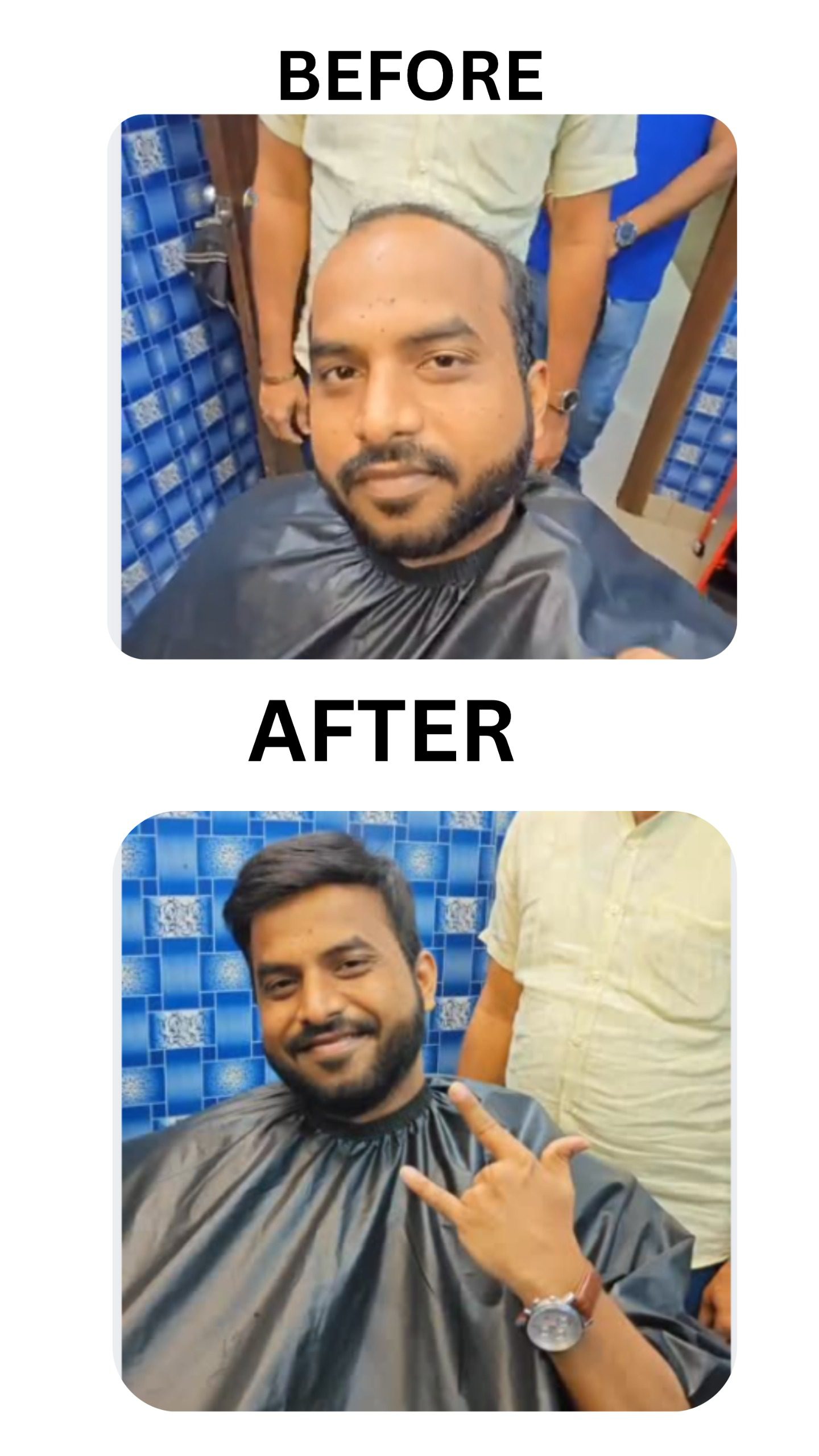
Situation: A 35 year old marketing professional in Vizag had a receding hairline and a thinning crown that had been getting worse for nearly three years. He’d tried two different oils and a shampoo that promised regrowth, with nothing to show for it Best Solution for Baldness Without Surgery
Challenge: He didn’t want surgery because of the cost and the year long wait for visible results, but he also needed something that looked completely natural for client meetings.
Action: He went in for a consultation at a hair studio, got his scalp mapped, and opted for a custom non surgical hair system matched to his natural hair color and density.
Result: Within a single day, he had a full, natural looking head of hair. He’s been getting it maintained every few weeks since, and colleagues who’ve known him for years genuinely cannot tell it’s not his own growth.
Expert Tips for Long Term Success
Don’t treat any single method as a forever decision. Hair loss is progressive, so what works for you at 30 might need adjusting by 40. Reassess every year or two Best Solution for Baldness Without Surgery
If you go the hair patch route, ask specifically about the base material. Thinner, more breathable bases tend to look more natural and feel more comfortable in hot, humid weather, which matters a lot in cities like Hyderabad and Vizag.
If you’re on medication, get photos taken under the same lighting every month. Your own eyes adjust to gradual change and miss progress that a camera catches clearly.
Never skip the dermatologist consultation before starting Finasteride. It affects hormone pathways in the body, and not everyone is a good candidate.
Frequently Asked Questions
Is there a permanent solution to baldness without surgery?
Non surgical hair replacement systems can be worn long term and replaced or rebonded indefinitely, functioning as a permanent solution in practice, even though the hair isn’t biologically your own growing hair.
Which is better, Minoxidil or a hair patch?
It depends on your goal. Minoxidil works on existing weakening follicles and takes months to show results. A hair patch gives instant, full coverage regardless of how advanced your hair loss already is.
Does PRP therapy actually regrow hair?
PRP may support existing weak follicles and is often used alongside other treatments, but results vary significantly from person to person and it’s rarely a standalone fix for advanced baldness.
How long does a non surgical hair system last?
The hair system itself can last months to years with proper care, while the bonding typically needs renewing every two to six weeks depending on the adhesive type and your activity level Best Solution for Baldness Without Surgery
Can I swim and exercise with a hair patch?
Best Solution for Baldness Without Surgery Yes, properly bonded systems are designed to handle sweat, swimming, and regular gym activity without lifting or shifting.
Is scalp micropigmentation painful?
It feels similar to getting a tattoo, a manageable level of discomfort for most people, and numbing options are often available at reputable studios.
At what age should I start treating hair loss?
The moment you notice consistent shedding or a changing hairline, regardless of age, since early intervention generally gives you more options and better outcomes.
Are non surgical hair systems noticeable in person?
A well fitted, properly color matched system from a skilled studio is designed to be undetectable, even up close, which is why checking a studio’s actual portfolio matters before booking.
Does insurance cover non surgical hair replacement or hair loss treatment?
Most health insurance plans in India treat hair loss as cosmetic and don’t cover these treatments, so it’s usually an out of pocket cost.
Key Takeaways
- Non surgical hair replacement Best Solution for Baldness Without Surgery gives the fastest, most visible results regardless of hair loss stage
- Minoxidil and Finasteride remain the most clinically backed medical options for early to moderate thinning
- LLLT and PRP work best as support treatments rather than standalone fixes
- Scalp micropigmentation suits people comfortable with a short hairstyle
- Acting early always preserves more options than waiting
- Always get a real scalp assessment before choosing a treatment path
- Combining methods is often smarter than relying on just one
Conclusion
Best Solution for Baldness Without Surgery doesn’t have to mean a trip to the operating table. Between non surgical hair replacement, proven medication, and supportive treatments like LLLT and PRP, there’s a real path forward for almost every stage of hair loss, without the cost, downtime, or risk that surgery brings.
The biggest mistake isn’t picking the “wrong” method. It’s waiting too long to pick anything at all.