
The Morning Everything Changes
You know that moment when you’re combing your hair in front of the mirror and you notice the part looking wider than it used to. Or you catch a photo someone clicked from behind and there’s a patch you didn’t know existed. Most men go through this quietly. They don’t talk about it with friends. They just start wearing caps more often or picking angles carefully in photos.
Here’s the thing though. Hair loss is not the end of the story anymore. Non surgical hair replacement has genuinely changed what’s possible for people in Hyderabad and Vizag who thought their only options were expensive surgery or accepting the bald spot forever.
This guide walks you through everything, what it actually is, how it works, what it costs, what mistakes people make, and how to pick the right studio instead of falling for a flashy ad.
Table of Contents
ToggleQuick Answer
Non surgical hair replacement is a method of restoring hair using a custom made hair patch or hair system that’s bonded or attached to your scalp without any surgery. It gives an instant, natural looking full head of hair, usually within a single sitting, and works for almost anyone regardless of how advanced the hair loss is.
What Is Non Surgical Hair Replacement Really
Think of it less like a wig and more like a second skin for your scalp. A thin, breathable base is custom shaped to match your head, real human hair is knotted into it strand by strand, and it’s then bonded onto your scalp using medical grade adhesive or tape.
Unlike the wigs your grandfather might have worn, modern hair patches sit flush against the skin. You can run your fingers through them, they move naturally in the wind, and honestly, most people can’t tell unless they know what to look for.
A client of ours in Kukatpally once told us his own barber didn’t realize he was wearing a system until the third haircut. That’s the level of realism we’re talking about today.
Why This Actually Matters
Hair loss hits confidence harder than people admit. It shows up in job interviews where you keep touching your hair nervously. It shows up on dates where you’re constantly aware of the angle someone’s looking at you from. It shows up in family functions where someone jokes about your forehead getting bigger.
Non surgical hair replacement solves this without the risks of surgery, without months of waiting for grafts to grow, and without the recovery time. You walk in with a receding hairline, you walk out a few hours later with a full head of hair.
For men in Hyderabad juggling demanding jobs in IT parks or business owners who can’t afford downtime, this practical side matters just as much as the confidence boost.
The Complete Step by Step Process
Step One: Consultation and Scalp Assessment
What It Means
This is where the studio actually looks at your scalp, hair loss pattern, hair texture, and skin type before recommending anything.
Why It Matters
Skipping this step is how people end up with patches that look fake or cause skin irritation. Every scalp is different, some are oily, some are sensitive, some have more visible veins or moles that need to be worked around.
How To Do It
A good studio will examine your hair loss stage using something like the Norwood scale, check your scalp health, and ask about your lifestyle, do you swim often, do you sweat a lot at the gym, do you work outdoors.
Example
Someone with an oily scalp working in Hitech City needs a different adhesive and maintenance schedule compared to someone with a dry scalp working from home.
Pro Tip
Always ask to see the stylist’s actual before and after portfolio, not stock photos from the internet.
Step Two: Custom Base Selection
What It Means
The base is the foundation material the hair is knotted into. Common types are French lace, Swiss lace, poly, mono, or a combination.
Why It Matters
This decides how natural it looks, how durable it is, and how it feels on your scalp throughout the day.
How To Do It
Lace bases give the most natural, undetectable look especially at the hairline, but they need more careful handling. Poly bases are sturdier and last longer with rougher daily wear.
Example
Someone who wants maximum realism for close up photos or public speaking usually prefers a French lace front. Someone who wants durability for gym and daily wear might mix lace front with a poly back.
Pro Tip
If you’re someone who exercises daily or lives in a humid city like Vizag, ask specifically about breathable, sweat resistant base options.
Step Three: Hair Matching
What It Means
Matching the replacement hair’s color, texture, density, and grey percentage to your existing hair.
Why It Matters
A mismatch is the number one giveaway that someone’s wearing a system. It’s usually not the patch itself that looks off, it’s the hair not blending.
How To Do It
The studio should physically compare hair samples against your natural hair in daylight, not just under salon lighting.
Example
A client from Chandanagar had roughly 20 percent grey at the temples. The studio blended matching grey percentage into the patch instead of giving him jet black hair, which would have looked jarring against his real hair.
Pro Tip
Bring a recent, well lit photo of your hair from a few years back if you had fuller hair then, so the studio understands your natural density and pattern.
Step Four: Attachment and Bonding
What It Means
This is the actual process of fixing the patch to your scalp using adhesive, tape, or clips depending on your preference.
Why It Matters
The bonding method determines how long it stays on, how it feels, and how often you need touch ups.
How To Do It
Skilled technicians clean the scalp thoroughly, apply the bonding agent evenly, and press the base down carefully to avoid air bubbles or uneven edges.
Example
Permanent bonding methods can last two to four weeks before a touch up, while semi permanent methods might need weekly maintenance.
Pro Tip
Ask what adhesive brand they use. Cheaper adhesives can cause itching or allergic reactions, especially in humid weather.
Step Five: Styling and Cutting
What It Means
Once bonded, the hair is cut and styled to blend with your natural hair and match the look you want.
Why It Matters
This is the final touch that makes it look like it’s actually growing from your scalp rather than sitting on top of it.
How To Do It
A trained hairstylist blends the patch hair with your natural hair, especially around the edges and crown, cutting it to complement your face shape.
Example
Someone going for a corporate look in Hyderabad might request a neat side part, while someone wanting a younger appearance might go textured and messy on top.
Pro Tip
Get the first styling done at the studio, not at your regular barber, until you know exactly how it should be maintained.
Common Mistakes People Make
Mistake One: Choosing Based on Price Alone
Impact: Cheap patches often use synthetic hair or poor quality bases that look unnatural and don’t last.
Solution: Compare value, not just cost. Ask what’s included in the price, hair type, base quality, and maintenance support.
Mistake Two: Skipping Maintenance Appointments
Impact: Skipping scheduled bonding touch ups leads to lifting edges, which is the biggest reason patches look obviously fake.
Solution: Stick to the maintenance calendar the studio gives you, even if it feels unnecessary at first.
Mistake Three: Not Disclosing Lifestyle Habits
Impact: Not mentioning that you swim regularly or sweat heavily at the gym means you get the wrong adhesive recommendation.
Solution: Be upfront about your daily routine so the studio can suggest the right bonding type from day one.
Mistake Four: DIY Cutting and Styling At Home
Impact: Cutting the patch yourself without training often ruins the blend and shortens its lifespan.
Solution: Always get styling done professionally, at least until you’re confident with basic trims.
Best Practices for Long Term Success
Stick to a consistent cleaning routine using products recommended by your studio, not random shampoos from the supermarket shelf.
Get scalp checkups every few months even if the patch feels fine, since scalp health affects how well the base bonds.
Keep a small maintenance kit at home for quick touch ups between salon visits.
Be patient during the first week. It takes a few days to get used to how it feels and moves.
Comparing Your Options
| Option | Recovery Time | Look and Feel | Maintenance | Typical Cost Range in INR |
|---|---|---|---|---|
| Hair Transplant Surgery | Weeks to months | Permanent, grows naturally | Minimal after healing | 60,000 to 2,00,000+ |
| Non Surgical Hair Patch | None, same day result | Natural if done well | Every 2 to 4 weeks | 15,000 to 60,000 |
| Hair Bonding | None | Natural, blended with existing hair | Regular touch ups | 10,000 to 40,000 |
| Regular Wigs | None | Less natural, detachable | Low, but visible edges | 3,000 to 15,000 |
Prices vary depending on the studio, hair quality, and base material used, so treat this as a general reference rather than a fixed quote.
Real Life Example
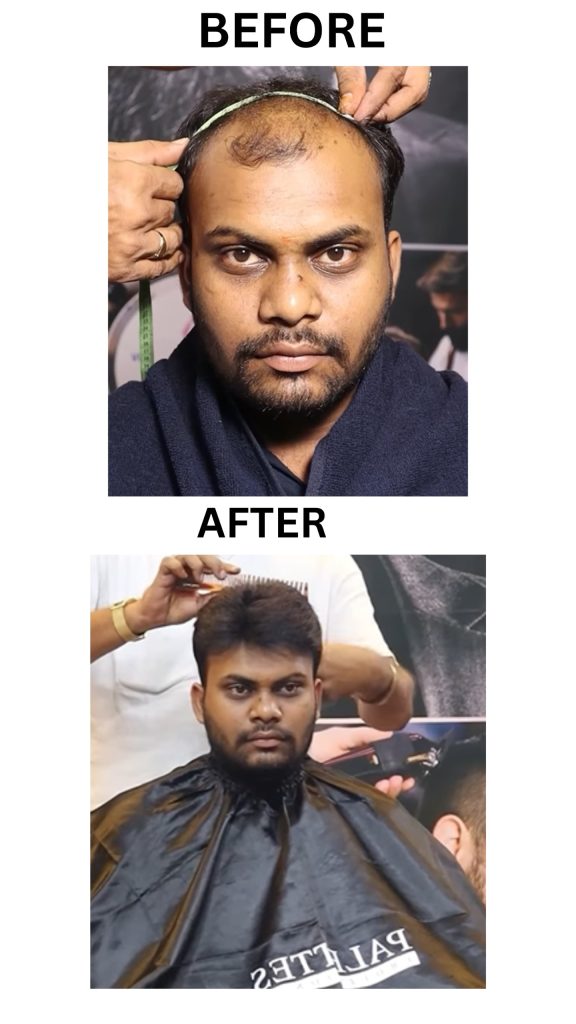
A 34 year old marketing professional from Hyderabad had been dealing with a receding hairline for close to six years. He’d tried minoxidil, a few supplements, and even considered a transplant, but the idea of surgery and months of waiting held him back.
He walked into a non surgical hair replacement studio expecting a wig like solution. Within one sitting, he had a full, natural looking hairline that matched his existing hair color and texture almost exactly.
The real shift happened two weeks later at a client meeting. Nobody asked him about his hair. Nobody noticed anything different. He told us later that the biggest win wasn’t how he looked, it was that he stopped thinking about his hair every five minutes.
Expert Tips for Getting the Best Results
Always request a trial fitting before committing to a long term plan, so you can see how it feels for a day or two.
Ask about the return or adjustment policy in case the fit or color needs tweaking after the first week.
If you travel often for work, ask your studio for a basic home maintenance guide so you’re not stuck without support.
Choose a studio that photographs your progress at each visit. It helps track how well the system is holding up and adjusting styling over time.
Don’t switch studios too often in the early months. Every studio has slightly different bonding techniques and hair sourcing, and jumping around makes it harder to build a consistent look and maintenance rhythm.
If you’re someone who colors your hair regularly, mention this early on. Hair systems can be tinted to match seasonal changes in your natural hair color, but it needs planning rather than a last minute request.
What Nobody Tells You About the First Month
The first few weeks are usually the adjustment phase, and this part rarely gets talked about honestly. You’ll probably touch your hair more than usual, just to check it’s still there. That’s normal.
Sleeping with it on for the first time feels strange to most people. Some prefer removing it at night in the early days until they get used to the sensation, while others adjust within a few days and sleep just fine.
There’s also a small mental shift that happens somewhere around week three or four, when you stop thinking of it as something separate and it just becomes part of how you look every morning. Most clients don’t expect that part, but it’s often the moment confidence actually kicks in, more than the day of the first fitting itself.
Frequently Asked Questions
Is non surgical hair replacement permanent?
No, it’s not permanent in the way a transplant is. The hair patch itself lasts based on quality and care, but it needs periodic maintenance and eventual replacement, usually every one to two years for the base.
Does it damage your natural hair underneath?
When done correctly by trained professionals using proper bonding techniques, it shouldn’t damage your natural hair. Poor application or leaving it on too long without maintenance can cause issues though.
How much does non surgical hair replacement cost in Hyderabad?
Costs typically range from 15,000 to 60,000 rupees depending on the hair quality, base material, and studio you choose, with ongoing maintenance costs on top of that.
Can I swim or exercise with a hair patch?
Yes, many modern bonding methods are designed to withstand swimming and heavy sweating, but you should inform your studio about your activity level so they recommend the right adhesive.
How long does one sitting take?
The first application usually takes two to four hours depending on customization needs, while touch ups typically take under an hour.
Is it noticeable that I'm wearing a hair system?
With quality materials, proper color matching, and professional styling, it’s genuinely difficult to notice, even up close.
What's the difference between hair bonding and a hair patch?
Hair bonding usually blends additional hair with your existing hair for added density, while a hair patch replaces a bald area entirely with a custom base.
Can women use non surgical hair replacement too?
Yes, non surgical hair replacement works well for women dealing with thinning hair or hair loss, with customization for length, volume, and parting style.
How often do I need to visit the studio for maintenance?
Most people need a touch up every two to four weeks depending on the bonding method and how active their lifestyle is.
Is this a good alternative to a hair transplant?
It depends on your goals. If you want instant results without surgery or recovery time, non surgical hair replacement is a strong option. If you want a permanent, surgery based solution and don’t mind the wait, a transplant might suit you better.
Key Takeaways
- Non surgical hair replacement gives instant, natural looking results without surgery or downtime
- The base material, hair matching, and bonding technique all affect how natural it looks
- Regular maintenance is not optional, it’s what keeps the patch looking real
- Costs vary widely, so compare value and quality rather than picking the cheapest option
- A proper consultation and trial fitting make a huge difference in the final result
Bringing It All Together
Hair loss doesn’t have to control how you see yourself or how you show up in your career and personal life. Non surgical hair replacement has come a long way, and when it’s done right, by people who actually know what they’re doing, the results speak for themselves.
The men and women who get the best outcomes aren’t the ones who rush into the cheapest option. They’re the ones who ask questions, get a proper consultation, and stick with the maintenance routine their studio recommends.
If you’ve been putting off dealing with your hair loss because you assumed surgery was the only real option, it might be time to rethink that.
Ready to See What's Possible
If you’re in Hyderabad or Vizag and thinking about non surgical hair replacement, the best next step is a proper consultation where someone actually looks at your scalp and hair loss pattern before recommending anything.
Book a free consultation, ask every question you have, and see the difference for yourself before making a decision.